
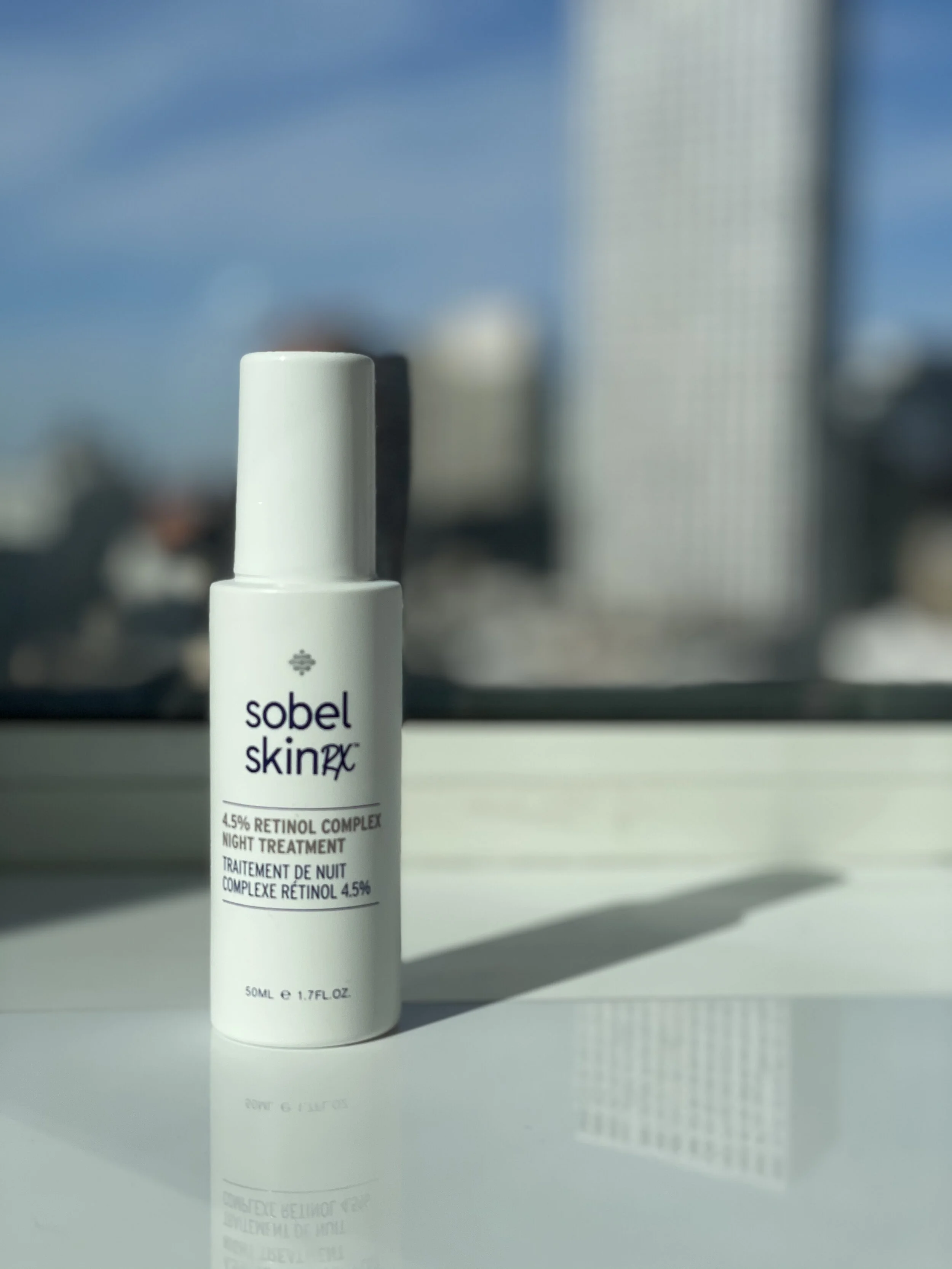
PRODUCT REVIEW: SOBEL SKIN RX 4.5% RETINOL NIGHT TREATMENT - BEST RETINOL SERUM, BEST FACE CREAM WITH RETINOL
SOBEL SKIN RX | 4.5% RETINOL NIGHT TREATMENT
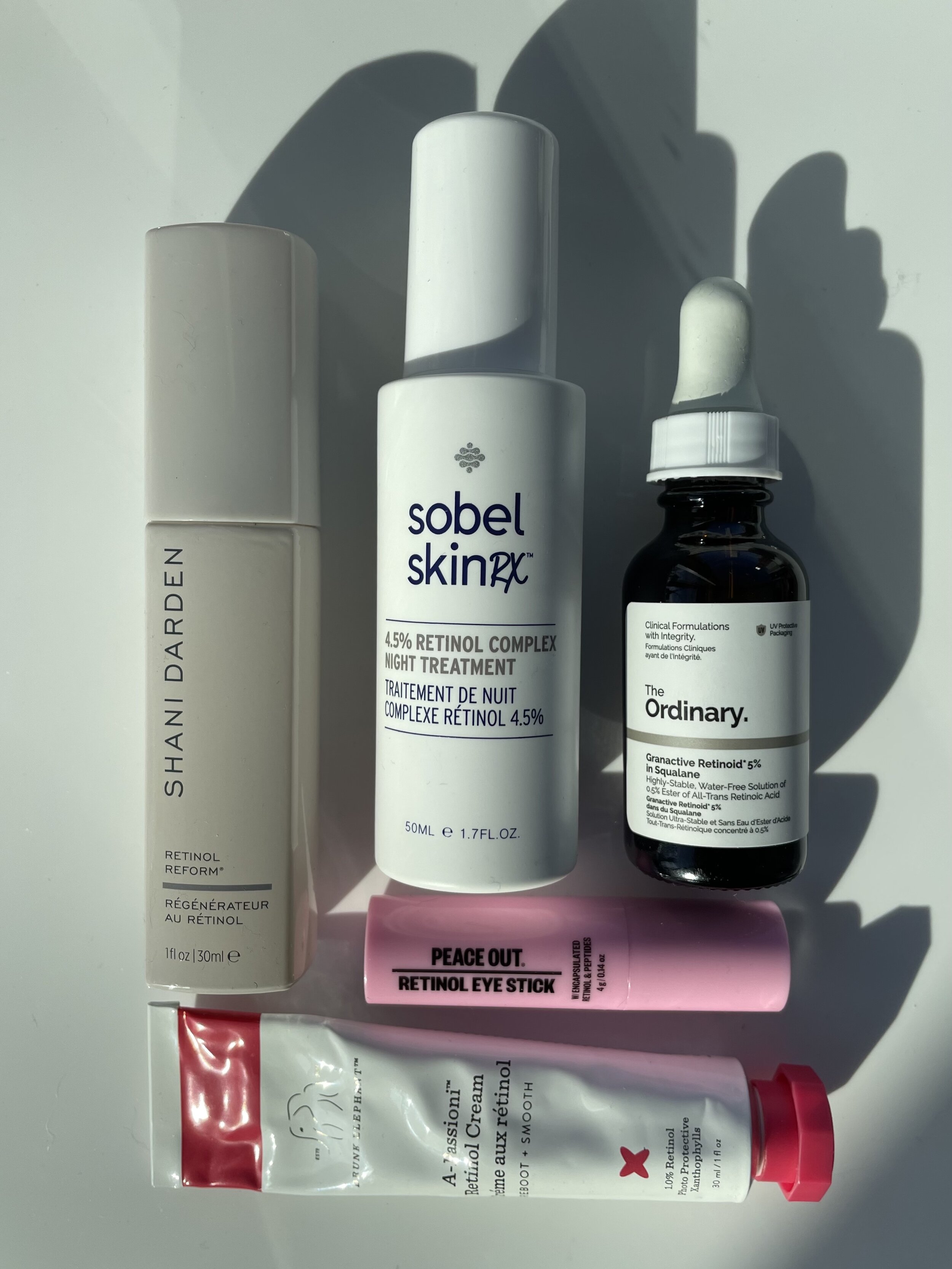
This review was originally part of my blog article titled, Retinol, Retinoids, Retinoic Acid Part One: Best Retinol Serums, Best Retinol Creams from Paula's Choice, Wander Beauty and First Aid Beauty. You can still catch the full piece here.
—
Two weeks ago, I pushed past my limits to craft the first of two long deliberated upon articles on my favorite Retinol products. I use “favorite” loosely as I’m not the biggest fan of Retinol to begin with. So, it’s taken me a long time, over an arduous journey, to arrive at a collection of what I truly consider the best retinol face creams, best retinol serums and even the best eye creams with retinol that I felt comfortable enough to recommend.
That first piece was titled, Retinol, Retinoids, Retinoic Acid Part One: Best Retinol Serums, Best Retinol Creams From Paula's Choice, Wander Beauty And First Aid Beauty. In part one, I reviewed the gentler five of my top ten recommendations, including two innovative face creams that combine Retinol with Bakuchiol.
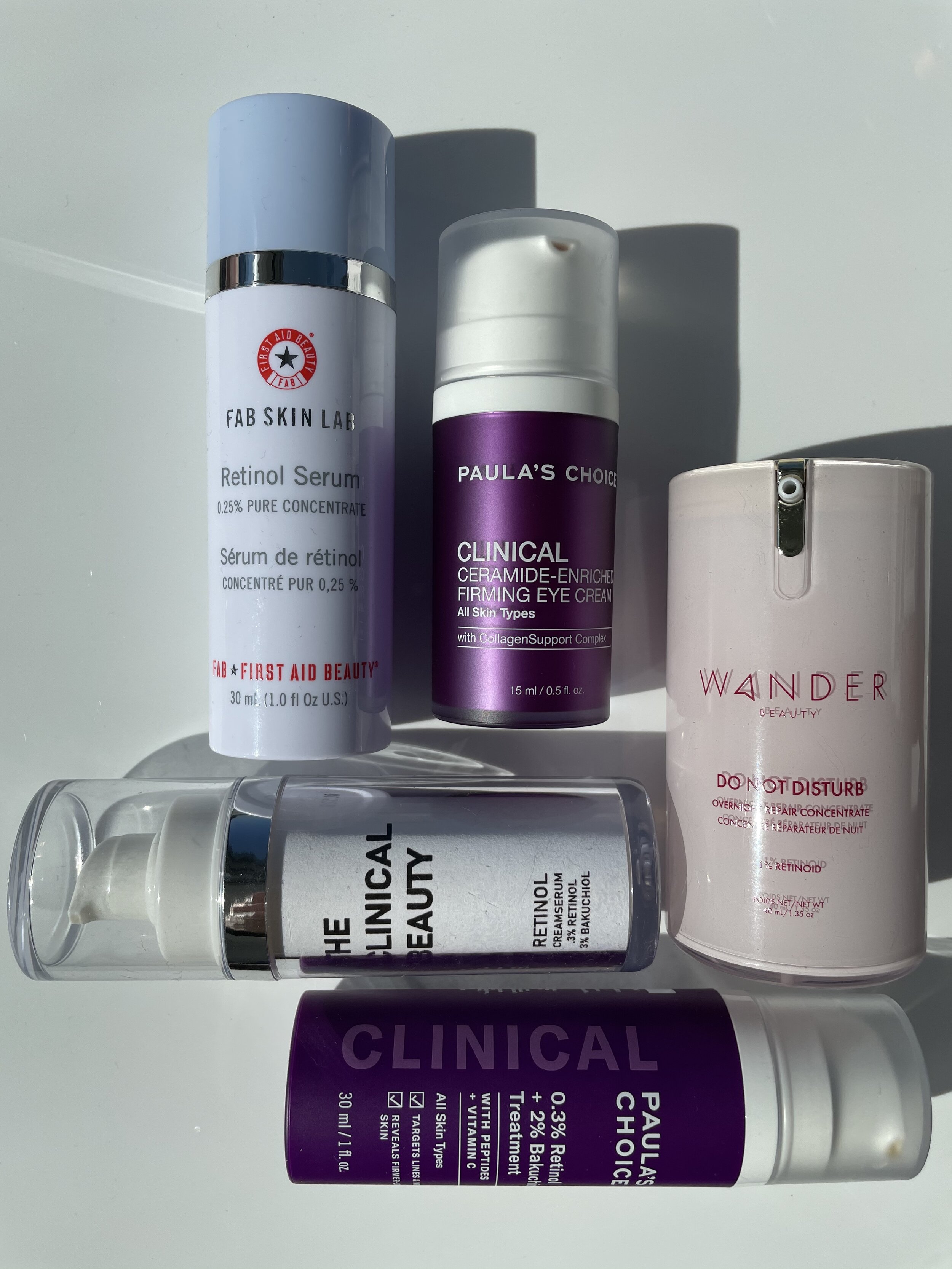
RETINOL, RETINOIDS, RETINOIC ACID PART ONE: BEST RETINOL CREAMS FROM PAULA'S CHOICE, FIRST AID BEAUTY AND MORE!
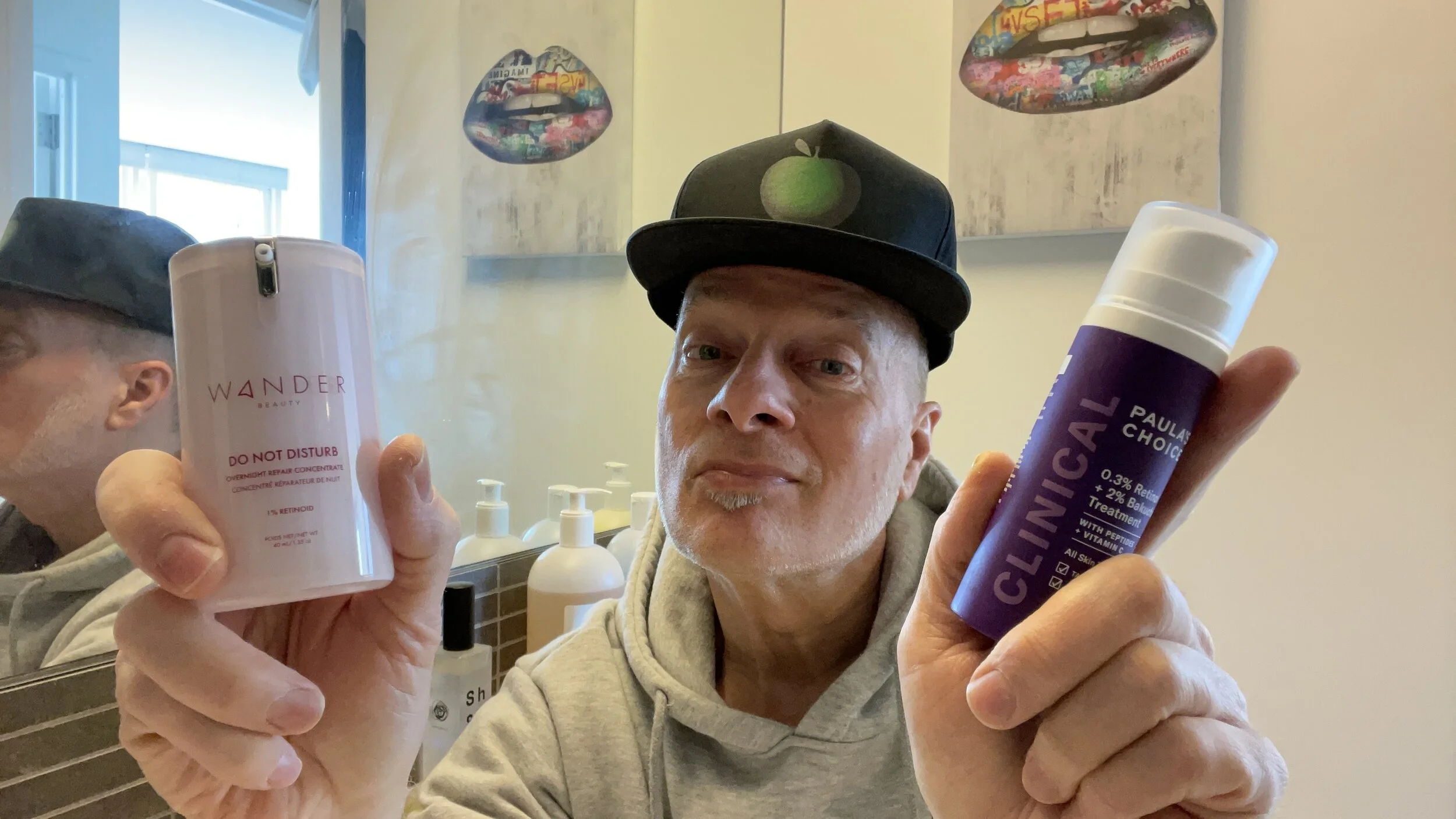
The first five recos included the Wander Beauty Do Not Disturb Overnight Repair Concentrate, the Paula’s Choice 0.3% Retinol + 2% Bakuchiol Treatment and Paula’s Choice Ceramide-Enriched Firming Eye Cream — one of the best Retinol eye creams I’ve come across. For sensitive skin types, there’s First Aid Beauty’s FAB Skin Lab Retinol Serum 0.25% Pure Concentrate. And, another Retinol-Bakuchiol combo, The Clinical Beauty’s 0.3% Retinol and 3% Bakuchiol Creamserum. It’s an extraordinary skincare formulation that you don’t want to miss!
If you’re curious about each of these, you can catch part one here; though the information on the various forms of retinoids, their differences and benefits is the same in parts one and two.
My first real experience with Retinol was the Paula’s Choice Clinical 1% Retinol Treatment. To me, that’s the OG of Retinol products. Much like the Paula’s Choice 10% Niacinamide Booster is my OG Niacinamide serum — and perhaps the best anti-aging serum ever. (Psst…I’ve reviewed it on the blog here.)
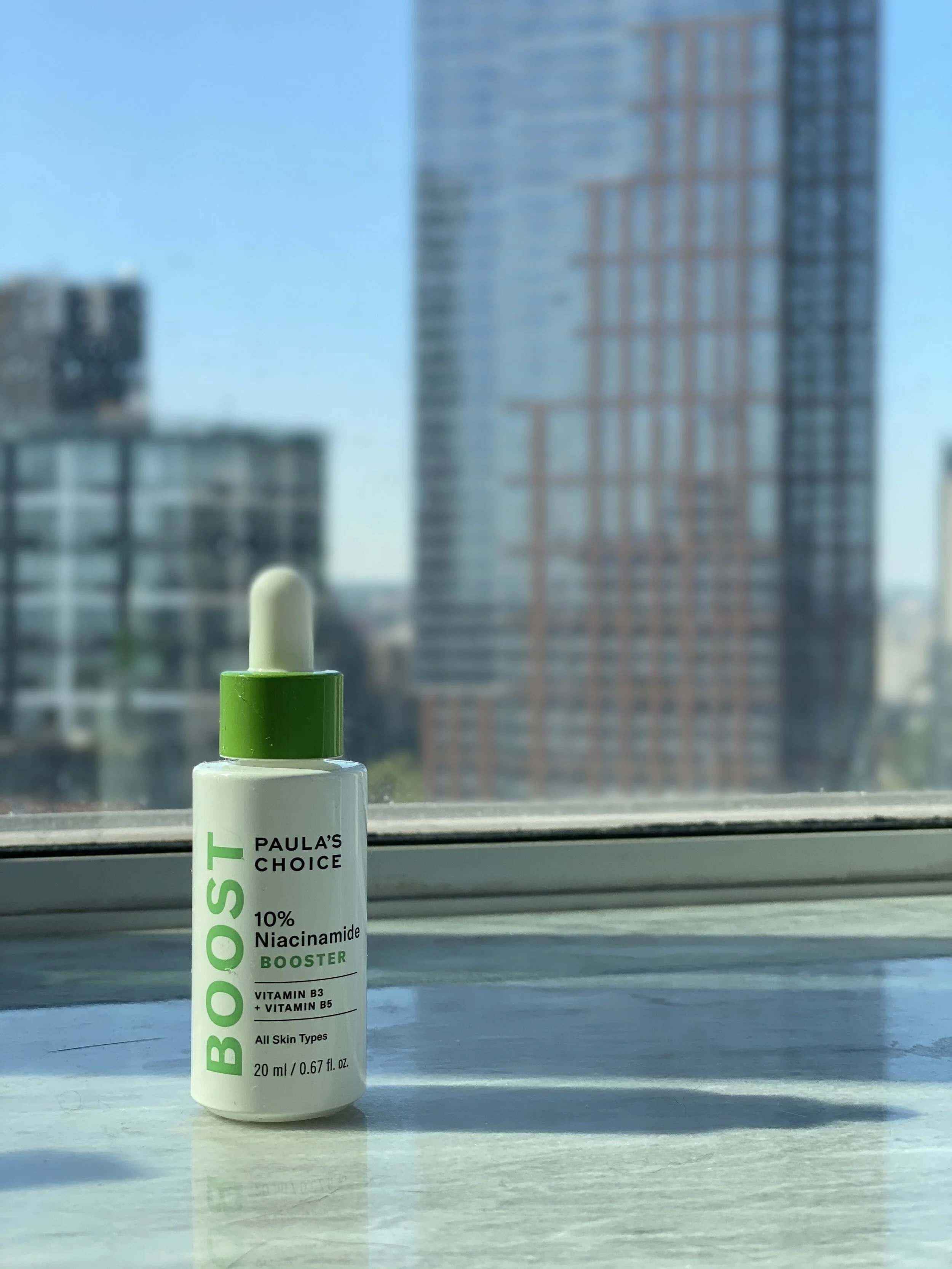
PRODUCT REVIEW: PAULA’S CHOICE 10% NIACINAMIDE BOOSTER – THE BEST NIACINAMIDE SERUM
Paula’s 1% Retinol Treatment made Retinol an indispensable part of my regular skincare routine. My first experience with it was like playing with fire. Retinol is like that. You have to proceed with caution. Many people build up a tolerance for it that allows them to use it daily.
Not me.
I can use a Retinol treatment once, sometimes twice, a week. You have to find your own balance. It took me a long time to accept that I wasn’t going to work up to daily use — and didn’t need to.
What Is Retinol and What Does Retinol Do for the Skin?
It’s commonly accepted that Retinol and retinoids, more specifically, are the gold standard in anti-aging. Like Vitamin C and Niacinamide (Vitamin B3), the Vitamin A derivative has multiple pro-skin health, anti-aging benefits. Among them are the smoothing of lines and wrinkles, potent antioxidant defense and visible skin firming. As with Niacinamide, topical retinoids — as all derivatives of Vitamin A are referred to — can even minimize the appearance of pores and defend skin against aging environmental damage.
There’s a superb piece on retinoids by the experts on the Paula’s Choice Research Team titled, The Complete Guide To Retinol: The Anti-Aging (And Anti-Acne) Hero — which you can catch here. Here is what I found most salient:
Retinol is classified as a Cell-Communicating Ingredient, which means that it can tell a skin cell how to behave. Retinol ‘tells’ developing skin cell in the lower layers of the skin – called the dermis, to develop normally, instead of a sun-damaged or genetically malformed skin cell. This is how, over time, Retinol can address multiple skin concerns.
Another way Retinol works is also by telling the older cells in the upper layer of skin to die quicker which in turn allows the newer, healthier skin to surface faster. This quicker skin cell turnover rate, paired with cell communicating abilities is what makes Retinol such a superstar!
There are many derivatives and strengths of retinoids available in both over-the-counter (OTC) and prescription products today. The term “Retinol” is the name of the purest form of Vitamin A, and used most often to refer to the non-prescription version of Retinoids.
However, Retinol itself is not active. It has to go through a conversion process in the skin to get to the active form which is then usable by the skin.
Retinyl Palmitate –> Retinol — > Retinaldehyde –> All-Trans-Retinoic Acid (Tretinoin)
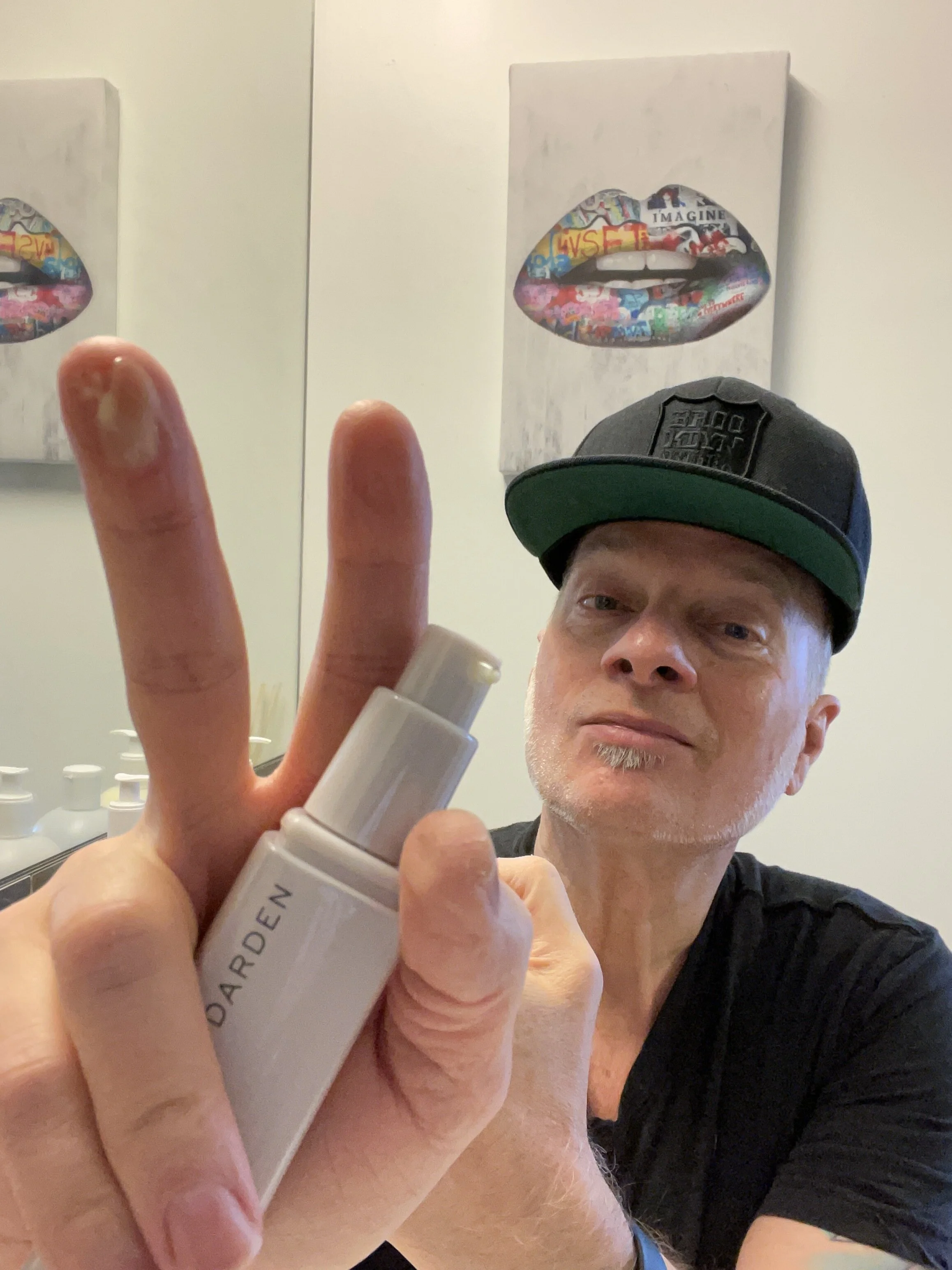
There are many forms of retinoids used in skincare today and it can get confusing. Brands and their formulators have multiple format options in seemingly infinite concentrations, depending on the formulation and the product’s claims positioning. Here is a breakdown of the most common forms with a brief description.
Retinyl Palmitate
This form of Vitamin A is created by combining Retinol, or pure Vitamin A, and palmitic acid – a saturated fatty acid derived from palm oil. Retinyl Palmitate is actually naturally occurring in the skin. Because of the lengthy conversion process required within the skin, it’s the least effective of the retinoids. As the weakest form, it’s also generally the most well tolerated.
Retinyl Palmitate gets a bad rap and is on the clean beauty ingredient hit lists of both Sephora and Credo, meaning a formula that contains it cannot be classified as “clean”. According to the experts on the Paula’s Choice Research Team, the claims that it’s unsafe are “based on a study from nearly 20 years ago that has never been reproduced or tested under real-life conditions such as how people use sunscreens that contain this ingredient.”
Retinol
The term “retinol” has become the catch-all for all forms of retinoids in skincare marketing. To be exact, Retinol is the name for the entire vitamin A molecule and the purest form of the antioxidant vitamin. While its anti-aging benefits are proven, it also has legitimate downsides; notably, Retinol can cause extreme sensitization, irritation, redness, dryness and unsightly flaking of the skin.
What causes Retinol irritation? Well, in order to achieve the unparalleled results of Retinol, the molecule must go through a lengthy molecular transformation in the skin as it converts to retinoic acid. It is this conversion process that causes the significant downsides associated with Retinol.
Ironically, while it’s known for causing skin sensitivity, Retinol is also quite sensitive itself. It needs to be packaged in an opaque, air-tight pump as it easily degrades in the presence of light and air. Just like its BFF Vitamin C!
Retinaldehyde (Retinal)
Retinal is even more potent and effective on the retinoid scale than Retinol itself. Interestingly, “Retinaldehyde has promise in being an anti-acne treatment, without the same harsh side effects of its prescription cousins.”
Because it is perhaps the most expensive of the retinoid class, it’s seldom used in topical skincare products — and is reserved for the savvy marketers who want their Retinol treatment to sound unique and to boast the highest efficacy without a prescription. The default is most often to formulate with the less expensive Retinol. Because of its higher potency, Retinaldehyde is used in lower concentrations, which can give the impression that the formula is weaker from a marketing perspective.
Retinyl Retinoate
This synthetic form of Vitamin A is part of a new generation of retinoids. Because of its slower conversion in the skin into Retinoic Acid, studies have shown it to be less problematic for skin than Retinol and pure form of topical Retinoic Acid — more commonly known as Tretinoin or Retin-A.
Because of the serious downsides of using Retinol, Retinyl Retinoate may become increasingly popular in the years ahead.
Hydroxypinacolone Retinoate (HPR) or Granactive Retinoid
Marketed as Granactive Retinoid, Hydroxypinacolone Retinoate (HPR) is the newest and most promising member of the class of anti-aging retinoids. HPR is an ester of retinoic acid with benefits on par with prescription-strength retinoic acid, commonly known as Tretinoin or Retin-A. The greatest benefit is that HPR is more readily tolerated by the skin, with none of the side effects of Retinol or retinoic acid — including irritation, sensitivity, dryness and flakiness.
How is it possible to have the upside without the downside? In order for the skin to benefit from Retinol, the Vitamin A molecule goes through a transformation process as it converts to retinoic acid in the skin. It is this conversion that leads to the irritation common to Retinol. Hydroxypinacolone retinoate does not require a lengthy conversion in order to achieve the sought-after anti-aging benefits of Retinol, making it far more tolerable.
Tretinoin / Retin-A
With Retinyl Palmitate at the low end of the retinoid scale, Tretinoin (or Retin-A) is at the exact opposite end — the strongest of the retinoids known as retinoic acid, the generic name for synthetic Vitamin A. Tretinoin is only available by prescription in most countries — except notably, Mexico, where its access is quite pervasive. Even I have been caught up in grabbing tubes of Retin-A at the airport before my flights home.
While Tretinoin is commonly used to treat signs of aging including fine lines, wrinkles and dark spots, the versatile medication is also an effective treatment for acne and sun-damaged skin. According to the Healthline website, “It may sound counterintuitive, but tretinoin works by irritating the skin. Tretinoin is able to speed up the life cycle of skin cells. It makes them divide faster and die faster, so newer, healthier cells can take their place.”
Let’s take a look at what I consider to be one of the best anti-aging creams with Retinol from my collection of the more potent retinoids in my two-part series…
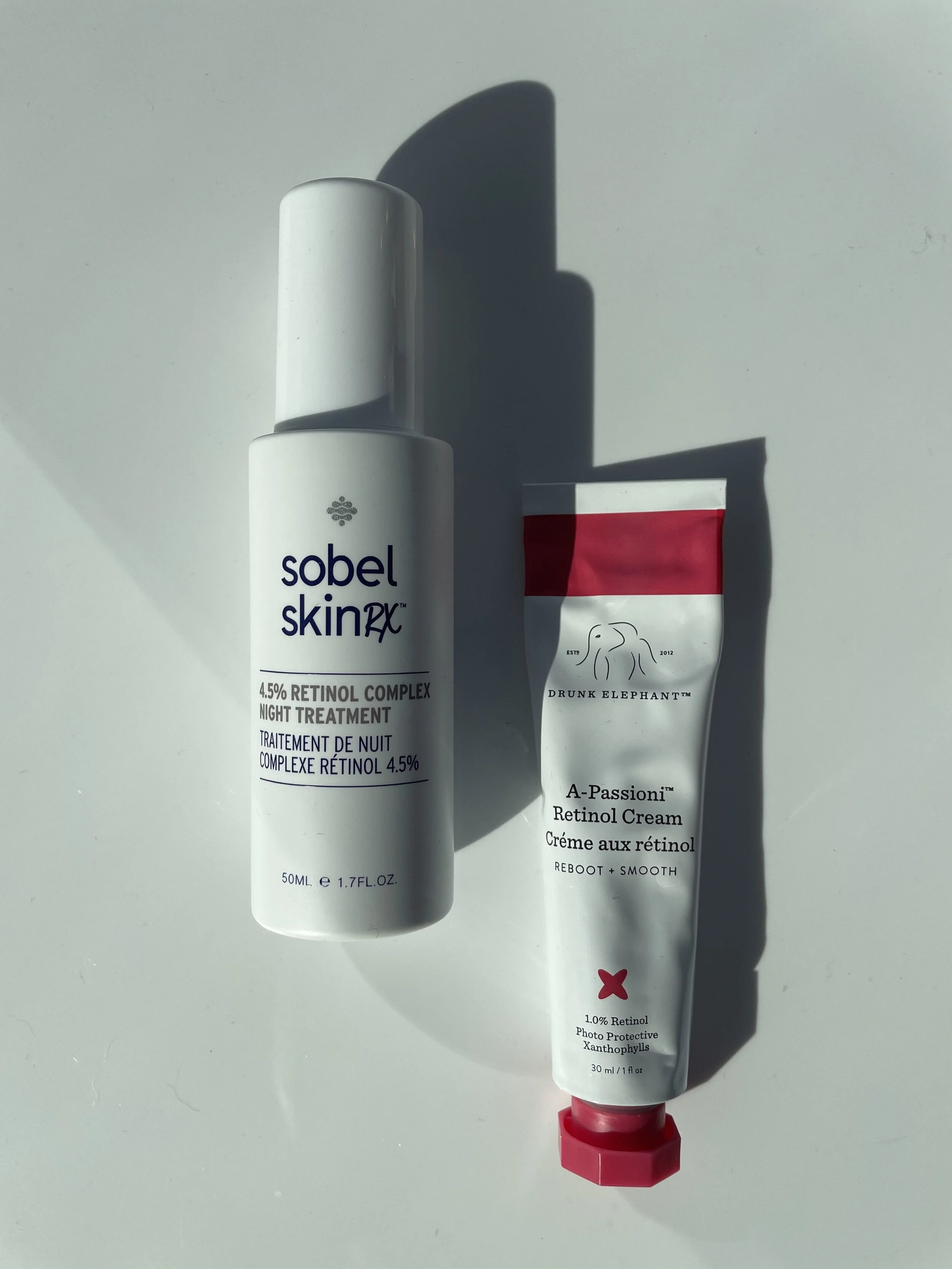
Sobel Skin Rx | 4.5% Retinol Night Treatment
What I believe to be the top-selling treatment from New York dermatologist Dr. Howard Sobel’s new brand, the Sobel Skin Rx 4.5% Retinol Night Treatment is a legit anti-aging cream with Retinol. After all, it sits right at the top of the search results on the Sephora website.
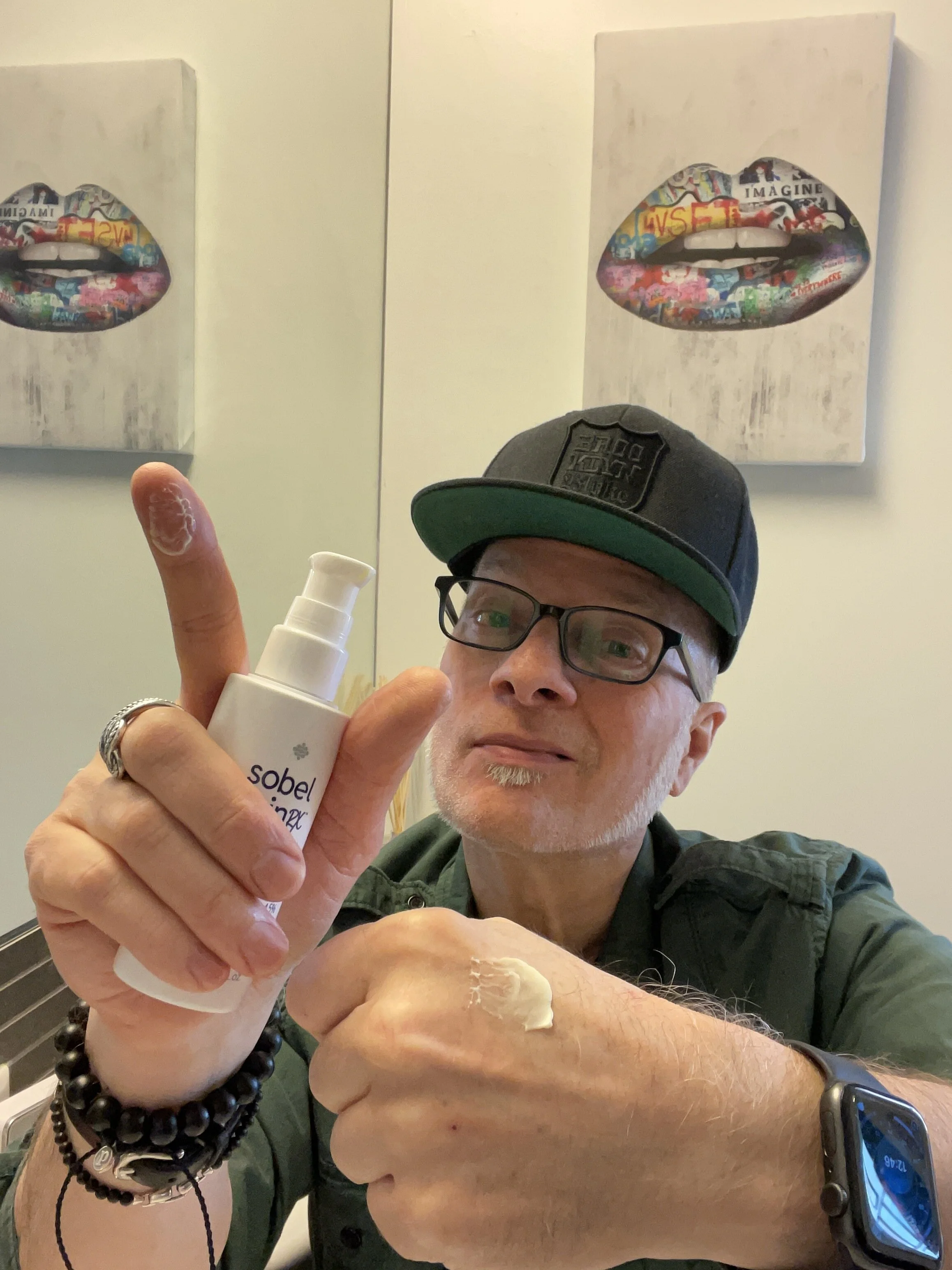
Out of all of today’s most popular skincare trends, anti-aging Retinol is perhaps one of the most serious (and potent!) topical treatments to come out of the dermatologist office. In fact, the purest, most effective form of the anti-aging retinoid molecule, Retin-A, still requires a prescription.
As crazy as it sounds, I know a lot of people who bring back tubes of prescription-strength retinoid creams like Retin-A from trips to Mexico.
If you’ve ever been, you know there are displays of Retin-A boxes throughout the airports in Mexican cities — piled high at checkout stands. I’m guilty of picking up a few myself for friends and family.
So, I completely get the appeal of an intense treatment like the Sobel Skin Rx 4.5% Retinol Night Treatment — and why it’s atop Sephora’s best-sellers.
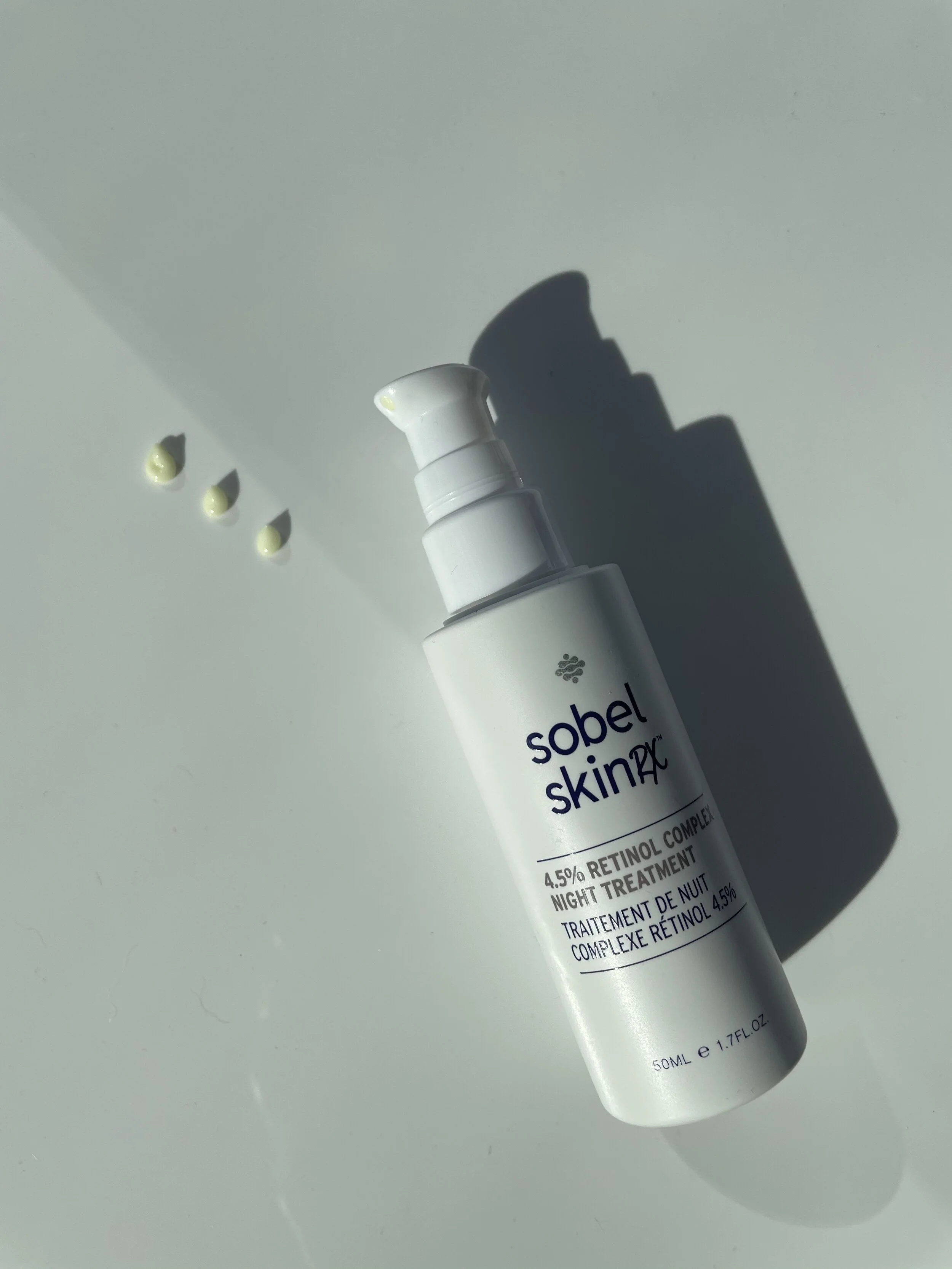
I haven’t had great luck with Tretinoin, the powerful prescription medication also known as Retin-A. That said, a concentration of 4.5% Retinol is a lot for an OTC skincare product and I have proceeded with the utmost caution when using it.
It terrifies me for good reason.
So, when testing it out, I applied Dr. Sobel’s 4.5% Retinol Night Treatment formula every third night or so — and haven’t even dared to try it on consecutive nights. I could tell I was pushing it when my skin started acting up. I know my skin, and I know it’s just too much for me.
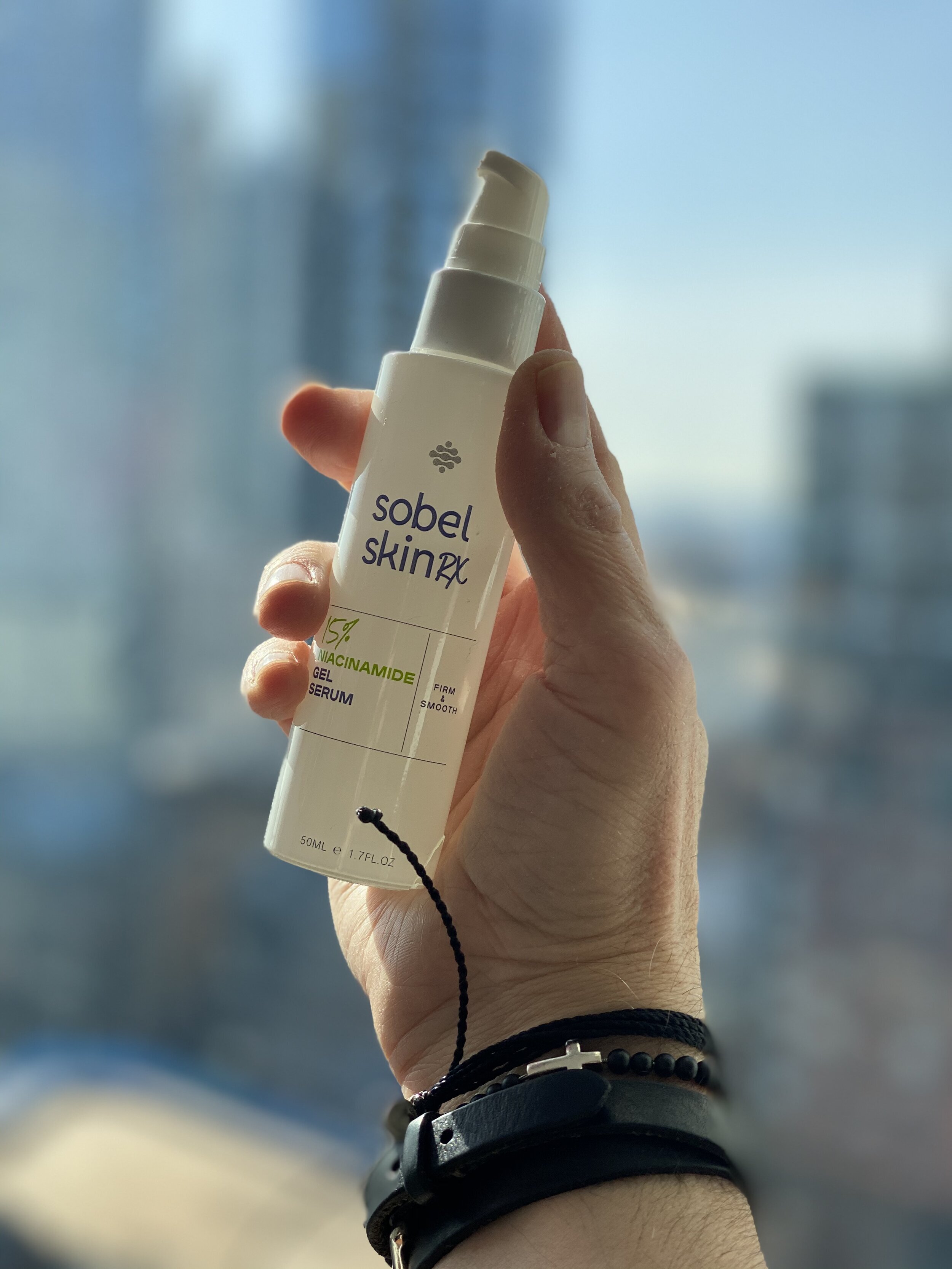
PRODUCT REVIEW: SOBEL SKIN RX 15% NIACINAMIDE GEL SERUM - ONE OF THE BEST NIACINAMIDE SERUMS
Like the other treatments in the Sobel Skin Rx collection, the 4.5% Retinol Night Treatment contains a complex of skin-soothing actives, including Aloe Barbadnesis Leaf Extract and Chamomile Extract. I love that Dr. Sobel is concerned about how skin will react to his hyper-active treatments. Without the personal care his patients are accustomed to receiving at his NYC practice, he knows they’re on their own, with the danger that entails.
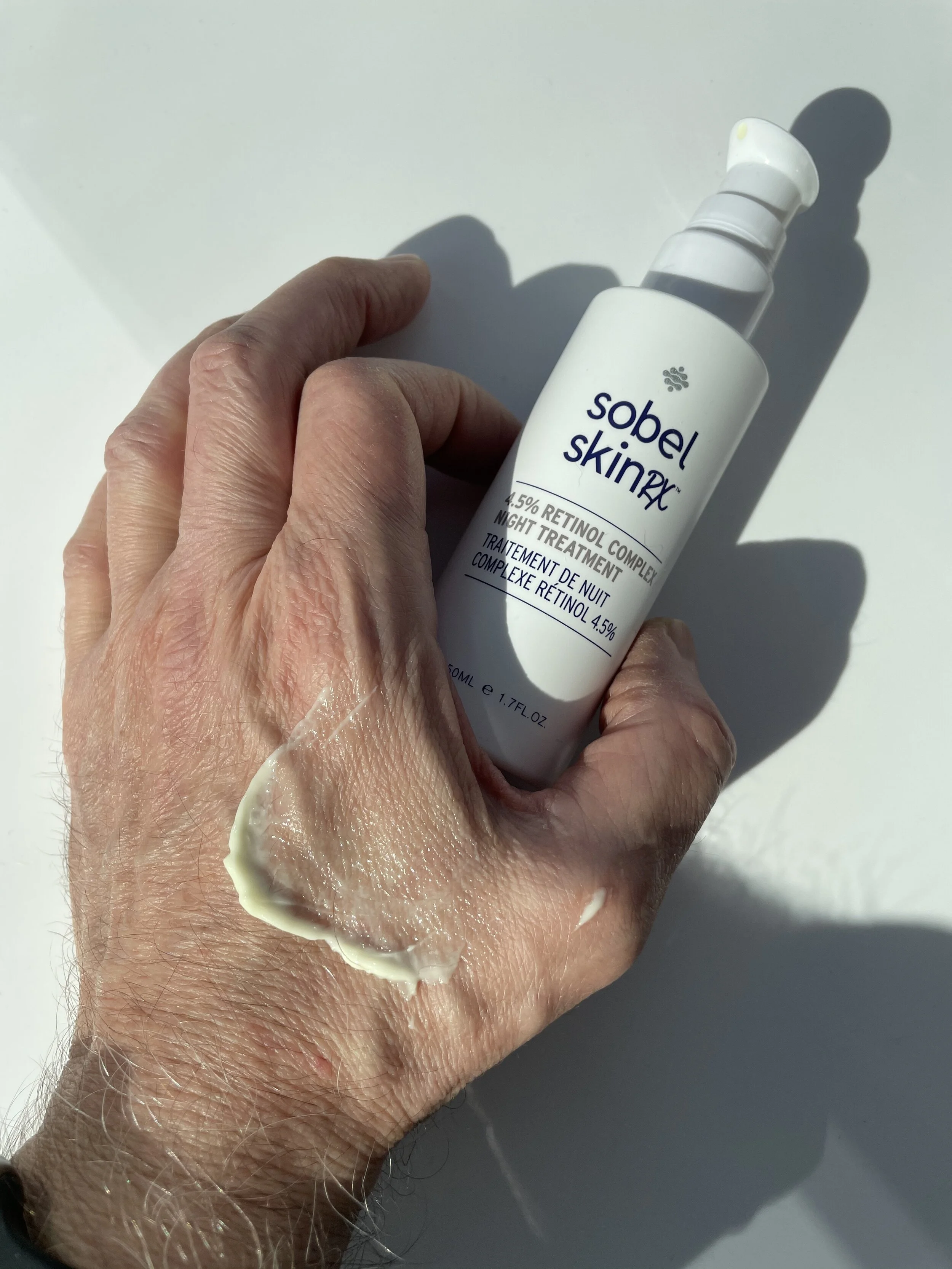
Dr. Sobel’s new Retinol treatment isn’t only powered by Retinol, perhaps the best anti-aging treatment for all skin types and skin concerns.
The 4.5% Retinol Night Treatment also contains an anti-aging complex of ceramides and peptides to plump and nourish skin.
It’s not for the faint of heart; but if you’re looking for a solid anti-aging treatment without having to fly all the way to Mexico to get it, you may want to consider the Sobel Skin Rx 4.5% Retinol Night Treatment. This is one serious Retinol treatment.
SHOP THE BLOG: Purchase the Sobel Skin Rx 4.5% Retinol Night Treatment for $105 here.

The Ingredient List of the Sobel Skin Rx 4.5% Retinol Night Treatment:
 cci, Dimethyl Isosorbide solv|vc, Hydroxypinacolone Retinoate (10% Retinoid Ester 240,000 Iu/Gm)
  cci, Aloe Barbadensis Leaf Extract so|emo|h, Chamomile Extract so|aox 0 0, Hydroxyethyl Acrylate/Sodium Acryloyldimethyl Taurate Copolymer vc, Isohexadecane emo|solv, Polysorbate 60 emu|surf, Phenyl Ethyl Alcohol, Ethylhexylglycerin pres, Hydrogenated Phosphatidylcholine emu, Caprylic/Capric Triglyceride emo, Pentylene Glycol solv|h, Shea Butter emo|vc, Ceramide III sii, Helianthus Annuus Seed Oil emo 0 0, Persea Gratissima Oil aox|emo 0 0-3, Macadamia Ternifolia Seed Oil emo, Rosa Moschata Seed Oil emo, Rosmarinus Officinalis Leaf Extract aox|so|amic
The Ingredient List of the Drunk Elephant A-Passioni Retinol Cream:
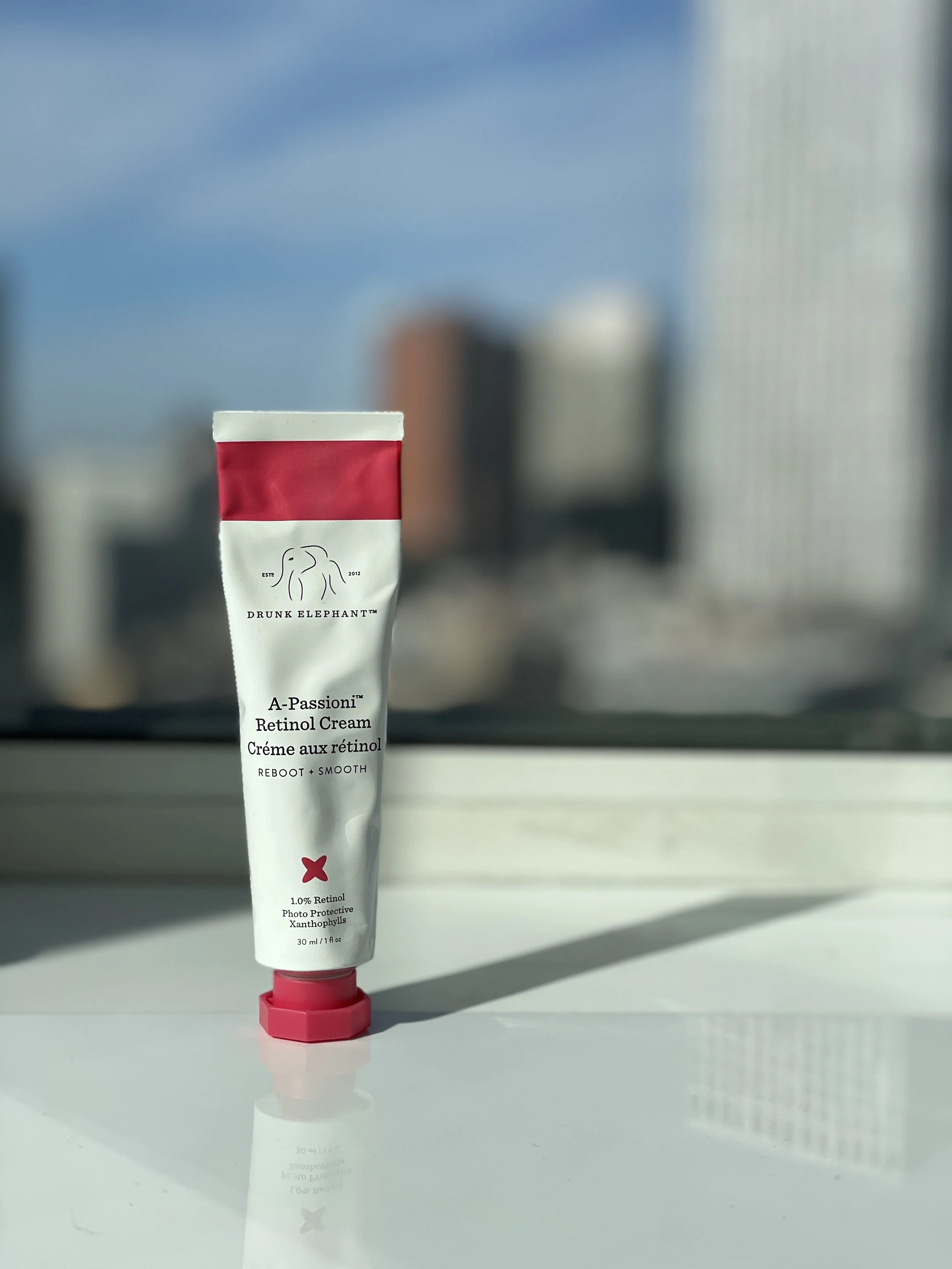
sii|h 0 0, Coco-Caprylate emo, Stearic Acid emo|vc 0 2-3, Coconut Alkanes emo|solv, Glyceryl Stearate emo|emu 0 1-2, Niacinamide cci|sb|aacne|h, Caprylic/Capric Triglyceride emo, Cetearyl Alcohol emo|vc|emu|surf 1 2, Pentylene Glycol solv|h, Passiflora Edulis Seed Oil emo, Retinol cci, Simmondsia Chinensis (Jojoba) Seed Oil emo 0 0-2, Sclerocarya Birrea Seed Oil emo, Prunus Armeniaca (Apricot) Kernel Oil emo 0 1-2, Cetyl Ethylhexanoate emo, Palmitoyl Tripeptide-1 cci, Palmitoyl Tetrapeptide-7 cci, Brassica Oleracea Acephala Leaf Extract h, Brassica Oleracea Italica (Broccoli) Extract, Tetrahexyldecyl Ascorbate aox|sb, Chrysin, Persea Gratissima (Avocado) Oil aox|emo 0 0-3, Linoleic Acid sii|emo|surf, Linolenic Acid sii|emo|surf|perf, Ceramide NP sii, Xanthophylls, Phytosphingosine sii|cci|aacne|amic, Phytosterols, Jojoba Esters so|emo|h, Physalis Pubescens Fruit Juice, Stearyl Glycyrrhetinate so, Oryza Sativa (Rice Bran) Extract abrasive/scrub, Glycine Soja (Soybean) Oil emo|perf 0 3, Carthamus Tinctorius Seed Oil aox|emo 0 0-2, Palmitoyl Hexapeptide-12 cci, Cetyl Palmitate emo 0 0, Trehalose h, Lauric Acid aacne|surf|emu 1 4, Sodium Hyaluronate Crosspolymer sii|aox|h, Olea Europaea (Olive) Fruit Oil aox|emo|perf 0 0-2, Glucosamine Hcl, Tocopheryl Acetate aox 0 0, Coco-Caprylate/Caprate emo, Pisum Sativum (Pea) Extract, Tocopherol aox 0-3 0-3, Bambusa Vulgaris Leaf/Stem Extract h, Phenoxyethanol pres, Caprylyl Glycol h|emo, Carbomer vc 0 1, Trideceth-6 Phosphate emu|surf, N-Hydroxysuccinimide, Ceteareth-20 emu|surf 3 2, Sodium Hydroxide buff, Laureth-23 emu|surf 0 3, Steareth-20 emu|surf 1 2, Propanediol solv|h, Chlorhexidine Digluconate amic|pres, Polysorbate 20 emu|surf 0 0, Trisodium Ethylenediamine Disuccinate chel, Chlorphenesin pres|amic, Potassium Sorbate pres, Ethylhexylglycerin presThe Ingredient List of The Ordinary Granactive Retinoid 2% in Squalane:
sii|emo 0 1, C12-15 Alkyl Benzoate emo|amic, Bisabolol so, Caprylic/Capric Triglyceride emo, Dimethyl Isosorbide solv|vc, Simmondsia Chinensis (Jojoba) Seed Oil emo 0 0-2, Hydroxypinacolone Retinoate cci, Solanum Lycopersicum (Tomato) Fruit Extract aox, Rosmarinus Officinalis (Rosemary) Leaf Extract aox|so|amic, Hydroxymethoxyphenyl Decanone aox|soThe Ingredient List of The Ordinary Granactive Retinoid 5% in Squalane:
sii|emo 0 1, C12-15 Alkyl Benzoate emo|amic, Bisabolol so, Dimethyl Isosorbide solv|vc, Caprylic/Capric Triglyceride emo, Simmondsia Chinensis (Jojoba) Seed Oil emo 0 0-2, Hydroxypinacolone Retinoate cci, Solanum Lycopersicum (Tomato) Fruit Extract aox, Rosmarinus Officinalis (Rosemary) Leaf Extract aox|so|amic, Hydroxymethoxyphenyl Decanone aox|soThe Ingredient List of the Shani Darden Retinol Reform:
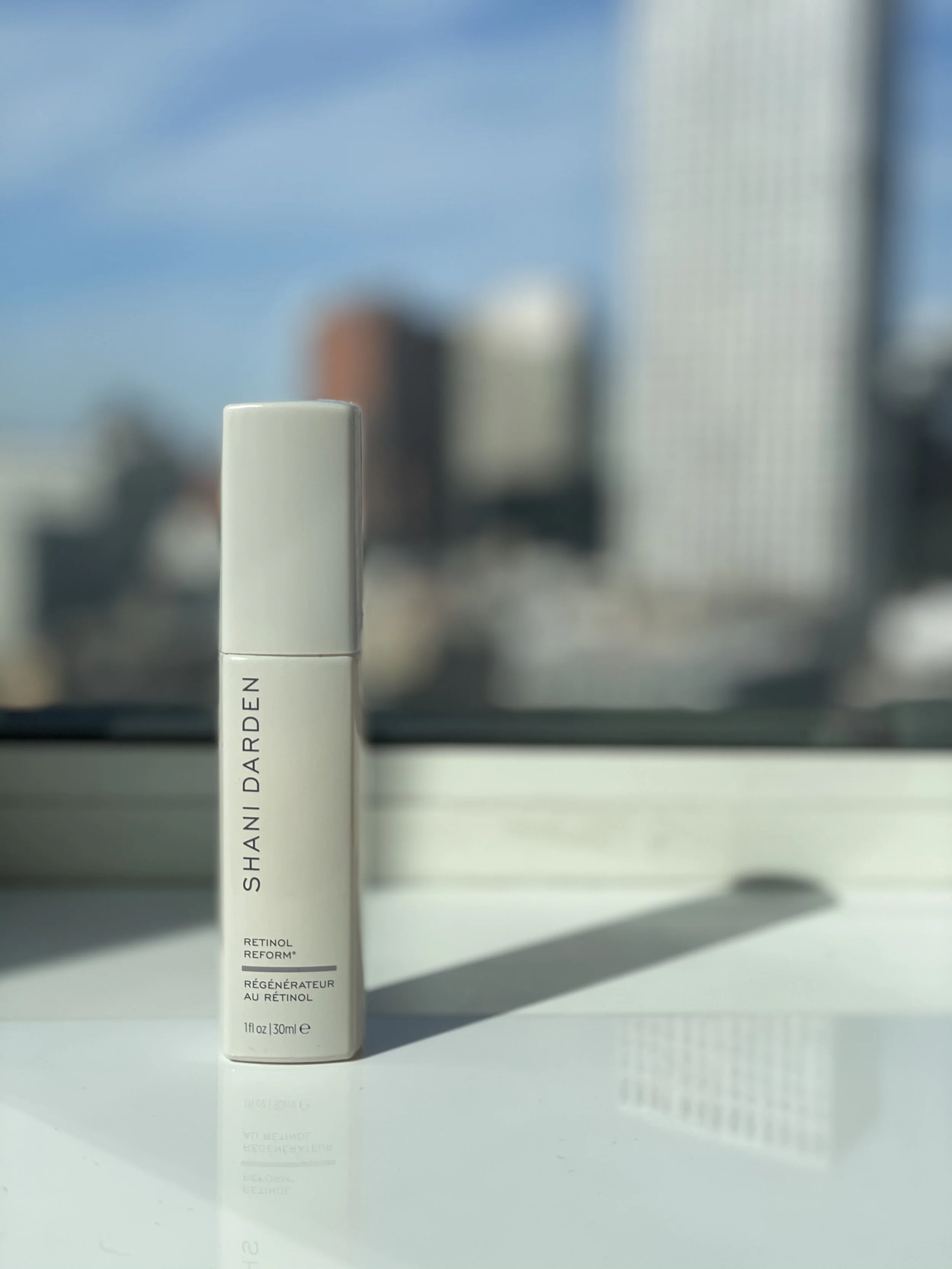
sii|h 0 0, Pyrus Malus (Apple) Fruit Extract h, Lactic Acid exf|h|buff, Hydroxyethyl Acrylate/Sodium Acryloyldimethyl Taurate Copolymer vc, Lactobacillus Ferment so|pres, Isohexadecane emo|solv, Retinol cci, Copernicia Cerifera Cera (Copernicia Cerifera (Carnauba) Wax, Cire De Carnauba) emo 0 1, Glucosamine Hcl, Plankton Extract, Camellia Sinensis Leaf Extract aox|so, Aloe Barbadensis Leaf Juice so|h, Tocopheryl Acetate aox 0 0, Niacinamide cci|sb|aacne|h, Hydrogenated Lecithin emo|emu, Linoleic Acid sii|emo|surf, Glycine Soja (Soybean) Sterols emo, Phospholipids sii|emo, Propanediol solv|h, Sodium Cocoamphoacetate surf, Sorbitan Isostearate emu 0 1-2, Polysorbate 60 emu|surf, Oryza Sativa (Rice) Bran Extract, Rosmarinus Officinalis (Rosemary) Leaf Extract aox|so|amic, Helianthus Annuus (Sunflower) Extract so|emo, Tocopherol aox 0-3 0-3, Cyamopsis Tetragonoloba,(Guar) Gum vc, Maltodextrin, Xanthan Gum vc, Lecithin emo|emu, Hydrolyzed Algin, Xylitylglucoside h, Anhydroxylitol h, Xylitol h, Tetrasodium Glutamate Diacetate chel, BHT aox|pres, BHA  aox|pres, Sodium Hydroxide buff, Phenoxyethanol pres, Caprylyl Glycol h|emo, Ethylhexylglycerin pres, Hexylene Glycol solv|emu|perf|surf 0-1 0-2
The Ingredient List of the Peace Out Retinol Eye Stick:
sii|emo 0 1, Diisostearyl Malate emo|surf, Ceresin vc 0 0, Polyethylene vc, Mica col, Bis-Diglyceryl Polyacyladipate-2 emo, Synthetic Wax emo|vc|abrasive/scrub, Caprylic/Capric Triglyceride emo, Silica Dimethyl Silylate emo|vc, Ethylene/Propylene Copolymer abrasive/scrub, Glycerin sii|h 0 0, Caprylyl Glycol h|emo, Carthamus Tinctorius (Safflower) Seed Oil aox|emo 0 0-2, Retinol cci, Oleic Acid emo|emu, Polysorbate 20 emu|surf 0 0, Lecithin emo|emu, Polycaprolactone, Terminalia Arjuna Extract, Ubiquinone aox, Astaxanthin aox, Oryza Sativa (Rice) Bran Wax, Bakuchiol cci|aox|amic, Sodium Hyaluronate sii|h 0 0, Phaseolus Radiatus Seed Extract, Acmella Oleracea Extract, Ceramide NP sii, Biotinoyl Hexapeptide-2 Amide, Heptasodium Hexacarboxymethyl Dipeptide-12, Spilanthes Acmella Flower/Leaf/Stem Extract amic, Astragalus Membranaceus Root Extract aox|emo, Haematococcus Pluvialis Extract aox, Olea Europaea (Olive) Fruit Oil aox|emo|perf 0 0-2, Psoralea Corylifolia Seed Extract, Avena Sativa (Oat) Meal Extract so, Tocopherol aox 0-3 0-3, 1,2-Hexanediol solv, Water solv, Sodium Magnesium Silicate vcThe Ingredient List of the Curology Custom Superbottle:
Custom formula based on dermatologist consultation.
My bottle: 4% Niacinamide, 0.07% Tretinoin, 5% Azelaic Acid.