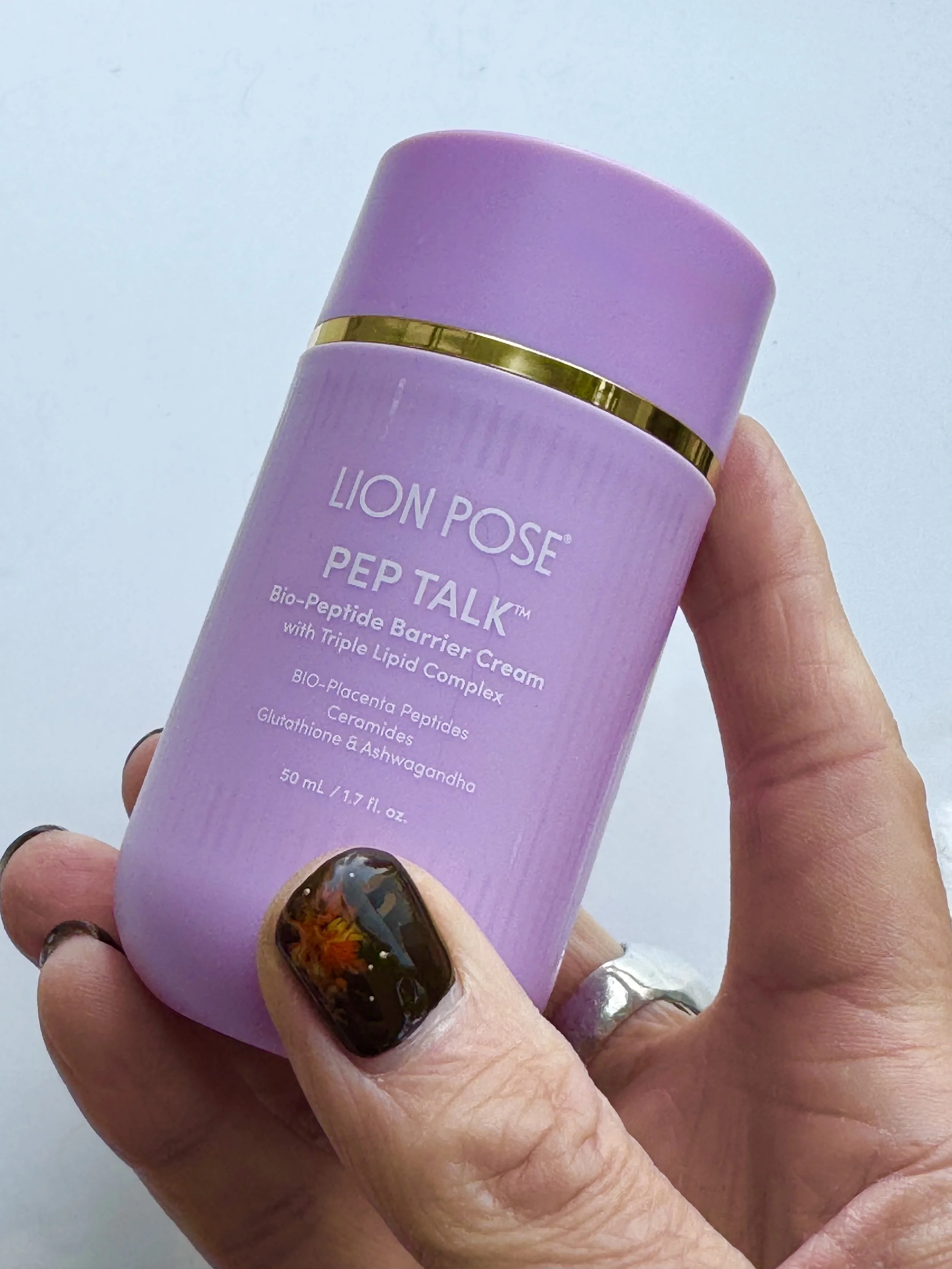

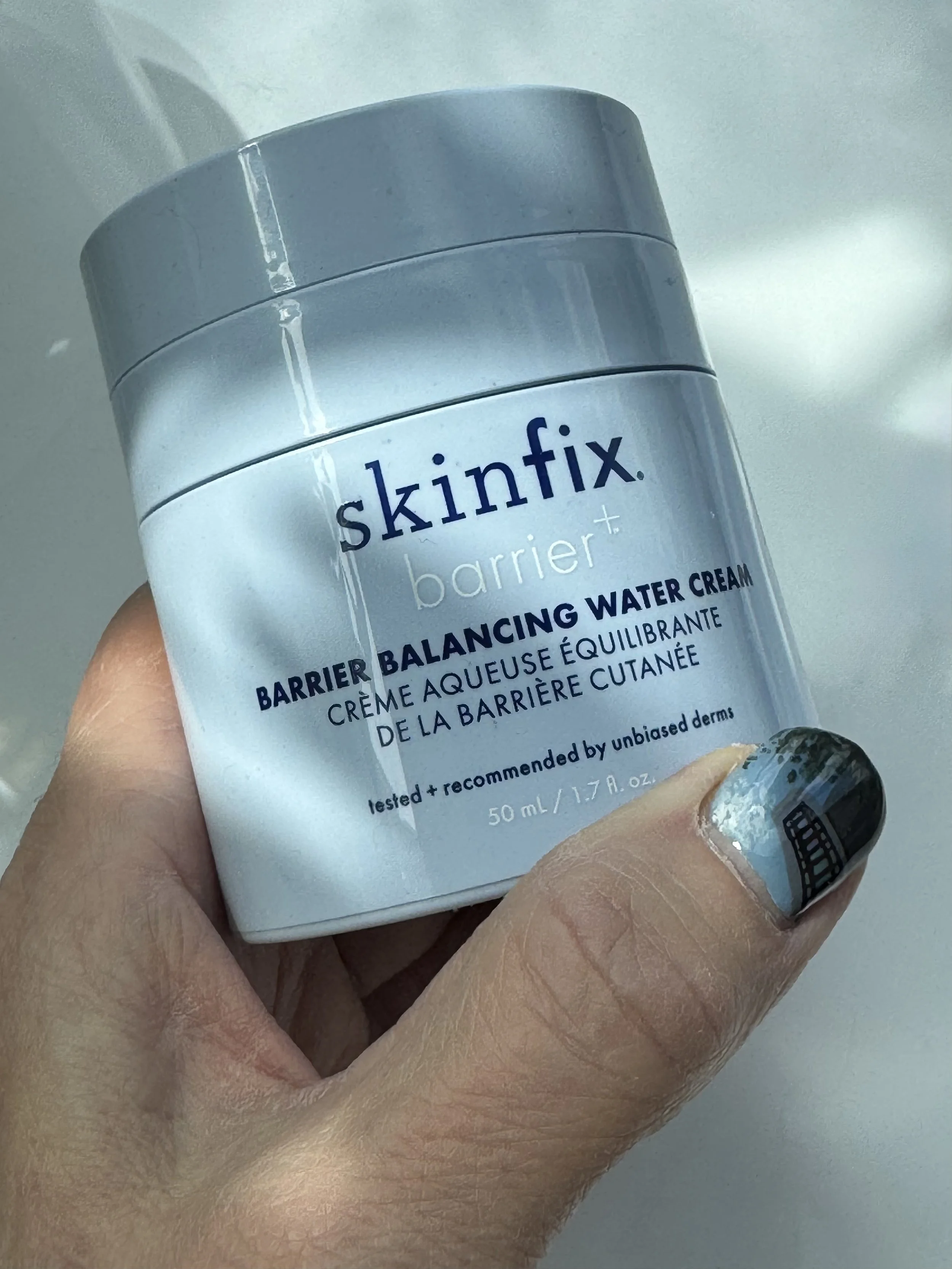
SKINFIX BARRIER BALANCING WATER CREAM PRODUCT REVIEW - What is a water cream? What's the difference between hydration and moisture? Do you hydrate or moisturize first?
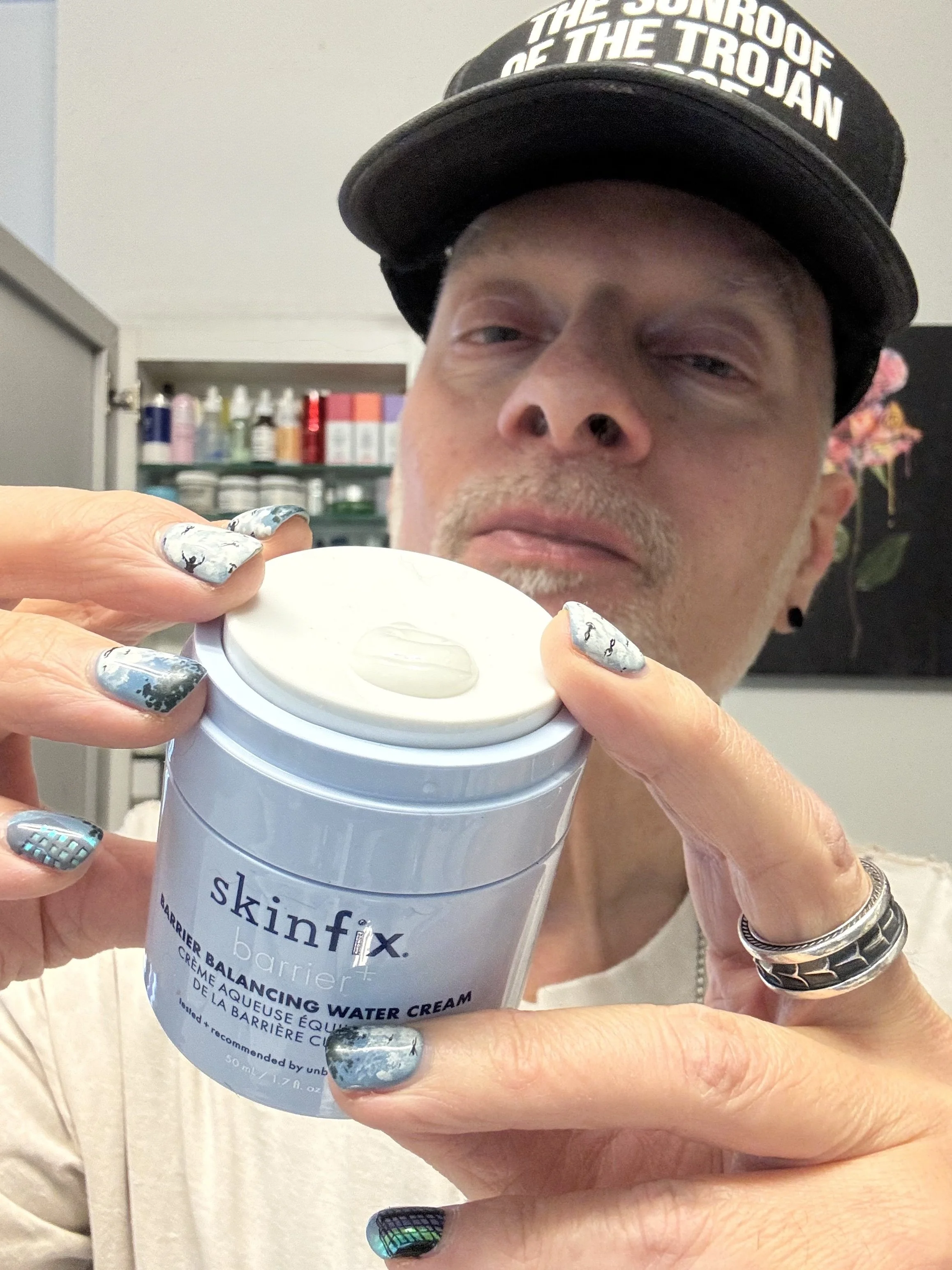
Switching up my skincare routine with the change of seasons has literally become routine itself.
This morning was the first time I reflexively reached for a lighter face cream since early last fall.
My pick? The Paula’s Choice Pro-Collagen Peptide Plumping Moisturizer – a super lightweight face cream I reviewed on the blog several weeks ago. You can catch it here.
As I wrote at the time, “If you prefer a lighter texture in your face cream, the Paula’s Choice Pro-Collagen Peptide Plumping Moisturizer is a superb option. Once temps warm up, it will make its way into my skincare routines – day and night.” And indeed, temps have warmed up!
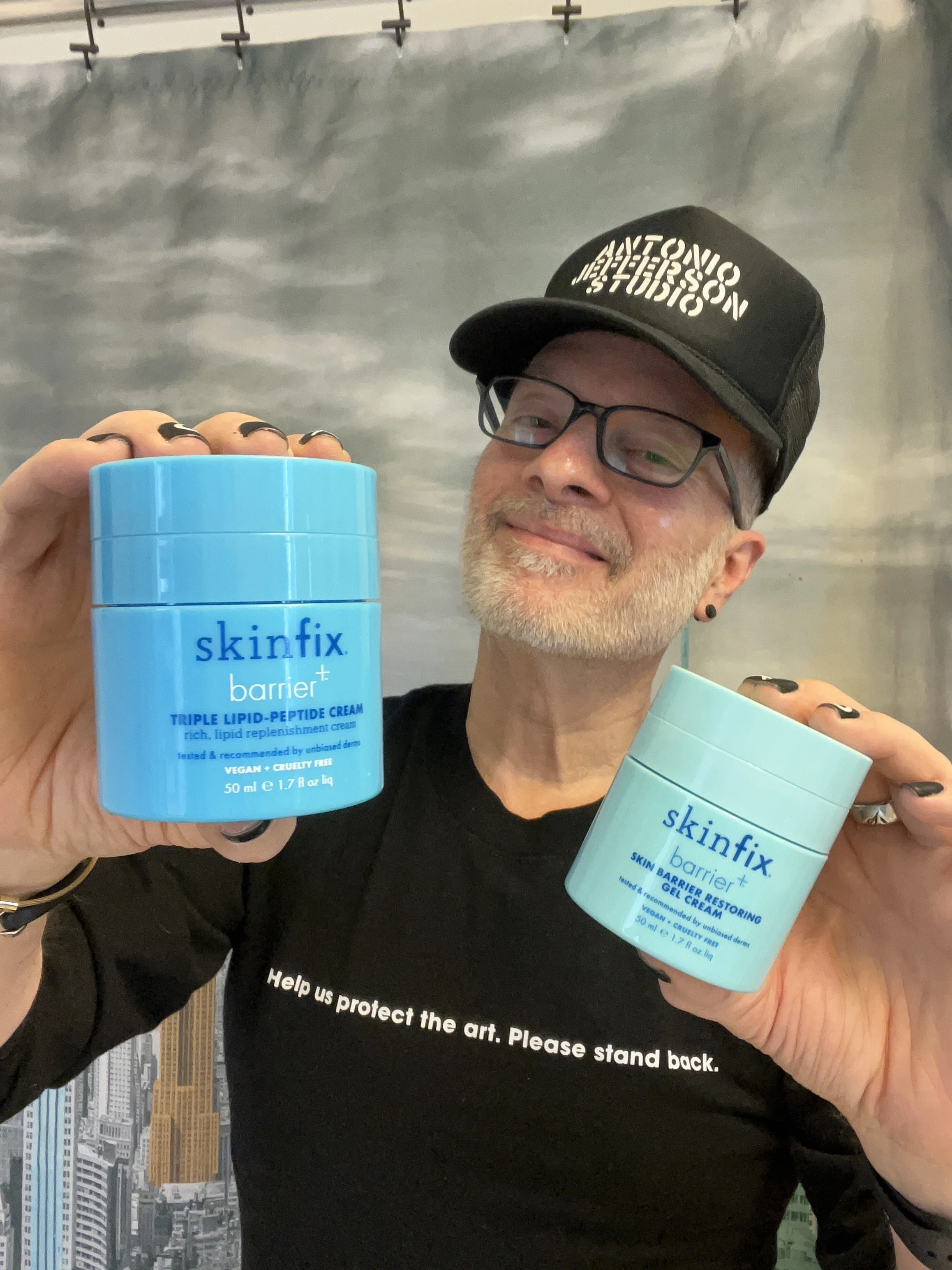
Over the last several weeks, and in anticipation of warmer weather, I’ve been testing out the new Skinfix Barrier Balancing Water Cream, too. With its exceptionally lightweight milky gel texture, it’s basically the polar opposite of the brand’s iconic cold-weather moisturizer, Triple Lipid-Peptide Cream. The lipid-rich TLPC is my perennial go-to face cream during the abysmal low-humidity winter months. For years, it’s been my personal skin savior.
I’m also a fan of the Skinfix Skin Barrier Restoring Gel Cream – a terrific gel-cream moisturizer ideal for hydrating oily skin and optimized for acne-prone skin. Clinically proven to strengthen the skin barrier and hydrate skin for up to 72 hours, I have to question why Skinfix introduced a second ultra-lightweight face cream.
But I’m not running the brand’s marketing! My role is to demystify skincare and weed out the good from the bad. My detailed review of the Skinfix Barrier Balancing Water Cream is just below.
Switching it up for warmer weather is more than just swapping out your face cream. I pump the breaks on the sunscreens and serums, too. If it doesn’t absorb, I don’t want it on my face.
For most of last winter, my go-to Vitamin C serum was the Paula's Choice 25% Vitamin C + Glutathione Clinical Serum. With a 25% concentration of two forms of Vitamin C (Tetrahexyldecyl Ascorbate and Ascorbyl Glucoside), it’s more of a light Vitamin C lotion than a conventional serum. My skin soaks it up in the cold; but in spring and summer, it tends to take too long to absorb and feels slightly greasy.
For something lighter and more serum-y, I’m a fan of the newish Drunk Elephant C-Luma Hydrabright Vitamin C Serum. With 10% Sodium Ascorbyl Phosphate, it’s a better option for oily and acne-prone skin – and the rest of us on a hot, humid day.
Catch reviews of my top picks of the best Vitamin C serums on the blog here.
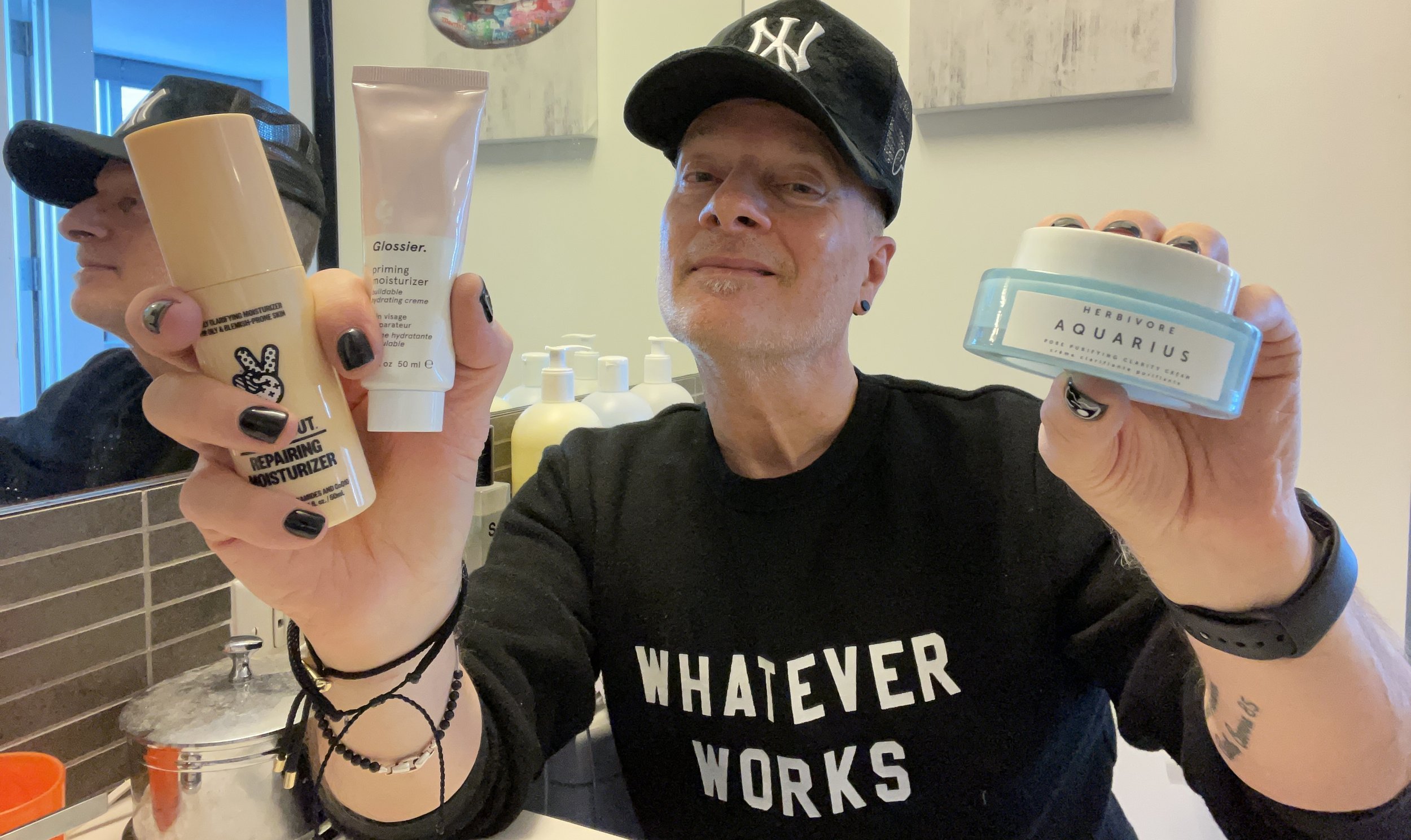
THE BEST FACE CREAMS FOR OILY SKIN
Before I get to my detailed Skinfix Barrier Balancing Water Cream product review, I wanted to explore the benefits of a water cream and the important differences between hydration and moisture.
1. What is a water cream?
A water cream is basically an ultra-lightweight moisturizer intended to enhance hydration by increasing your skin’s water content. All human skin needs similar levels of water to prevent dehydration and optimize healthy skin functions – no matter your skin type. Yet lipid, or oil, content can vary from person to person and is the key factor in identifying skin type, e.g. dry skin, oily skin, or combination skin.
Most water creams are oil-free or contain low concentrations of emollient plant oils and lipids, making them ideal for oilier skin types. Conversely, conventional face creams like the Skinfix Triple Lipid-Peptide Cream are designed with very high levels of plant oils and lipids, including ceramides and fatty acids, which effectively lock in moisture to prevent dryness and dehydration.
Explore my picks of the best face creams for dry skin on the blog here and best face creams for oily skin here.
Sources: Osea - What’s a Water Cream, and Do I Need One?; Healthline - Hydrating and Moisturizing Aren’t the Same for Your Skin — Here’s Why
2. What's the difference between hydration and moisture?
Simply, hydration refers to the water content in your skin, while moisture specifically includes the skin’s lipid or oil content. Hydration and moisture are the two components of my “lock and block” healthy skin strategy – that is, lock water in the skin and block its escape through the skin barrier.
When your skin is dehydrated: it lacks water and can appear dull, feel tight, and show fine dehydration lines. Hydrating ingredients like Ectoin, Hyaluronic Acid, Glycerin, and aloe help to attract water to the skin to increase its water content. A light, water-based hydrating serum with humectants like Hyaluronic Acid can effectively hydrate the skin.
But that’s only one piece of the puzzle. It is not enough to simply draw water to the surface of your skin. You need to prevent evaporation of water through the skin barrier (aka the moisture barrier) – a process referred to as trans-epidermal water loss (TEWL).
When your skin is dry: it lacks oil, which can lead to flakiness, roughness, cracking and a compromised “leaky” barrier. Lipids and emollients in the form of ceramides, fatty acids and numerous plant oils are the most effective way to prevent trans-epidermal water loss, the leading cause of dehydration. When your moisture barrier is sufficiently replenished with these oily substances, it is softer, plumper, and healthier.
The key is to strike the right balance for your skin type with a combination of hydrating and moisturizing ingredients. Finding the right moisturizer for you is essential to optimizing your skin health.
Explore my picks of the best face creams for dry skin on the blog here and best face creams for oily skin here.
Sources: Healthline - Hydrating and Moisturizing Aren’t the Same for Your Skin — Here’s Why; Medical News Today - What is the difference between skin hydration and moisture?
3. Do you hydrate or moisturize first?
No matter your skin type, you should always hydrate first. Whether you hydrate or moisturize first is easily answered by understanding the skin’s structure and the way it functions. Your skin’s lipid layer is closer to the surface – above its water reserves, which are found deeper in the skin’s layers. The purpose for this is to prevent trans-epidermal water loss (TEWL) and enhance its water levels to optimize overall skin health.
Mirroring how your skin functions, it is best to hydrate first with a humectant serum with Ectoin, Hyaluronic Acid or Glycerin. Once absorbed, follow with a moisturizer ideal for your skin type to replenish lipids like ceramides and fatty acids and seal water in to prevent TEWL.
Explore my picks of the best face creams for dry skin on the blog here and best face creams for oily skin here.
Sources: Healthline - What Order Should I Follow for My Skin Care Routine?; The Skincarma Pod - Episode 14: Demystifying Product Application - Good Skincare Habits for Optimizing Your Routine
4. How do I know if my skin needs moisture or hydration?
First, you need both! All skin requires similar levels of hydration, or water, in order to function properly. However, while all skin needs oil, the level of oils, or lipids, that your own skin needs is variable depending on your skin type.
A hydrating serum with humectants like Ectoin or Hyaluronic Acid will help to replenish your skin’s water levels. While effective, it is best to hydrate from within by drinking one ounce of water for every pound of body weight. If you weigh 150 lbs., you should drink 150 oz. of water daily.
If your skin is dry, it means you lack oils; you need moisture. To compensate and increase the level of skin lipids, you should use a richer moisturizer formulated to replenish ceramides and fatty acids in the skin. Explore my picks of the best face creams for dry skin on the blog here.
If your skin is oilier, reach for a lightweight gel-cream made with fewer oils – or no oils at all. Explore my picks of the best face creams for oily skin here.
Sources: Vaseline - Hydration vs. Moisture: How to Know What Your Skin Needs; Medical News Today - What is the difference between skin hydration and moisture?
5. Product Review
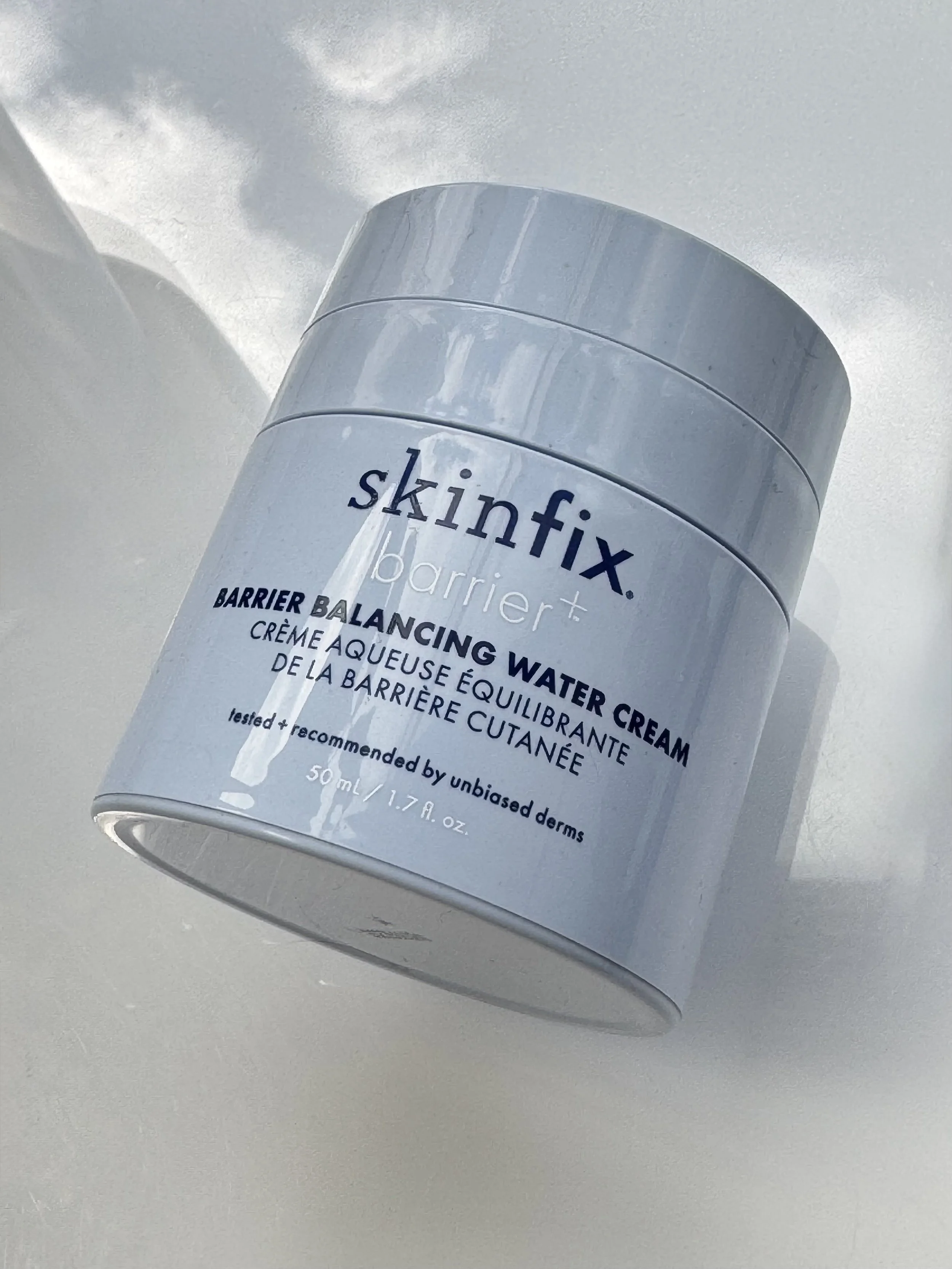
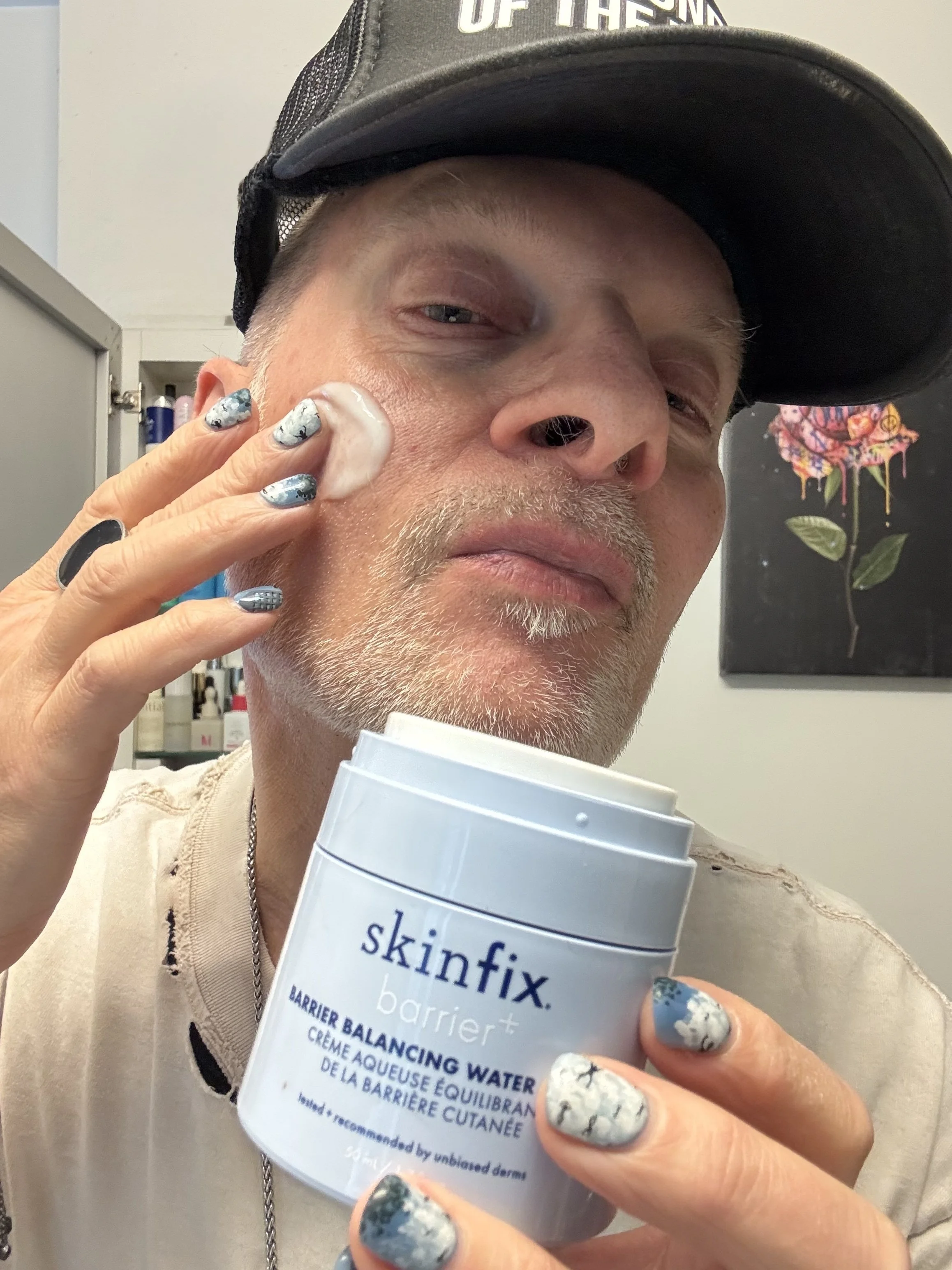
The Skinfix Barrier Balancing Water Cream is a relatively straightforward hydrating face cream. With its very light texture, it’s a great choice for oily skin – and ideal for all skins on a hot and humid summer day.
The first thing to dispel is that this new Skinfix moisturizer is not oil-free. If you are only interested in a 100% oil-free moisturizer, then Barrier Balancing Water Cream isn’t for you. But, you should also consider whether it’s beneficial for your skin health to refrain from replenishing your skin lipids.
The key is balance.
All human skin needs lipids to function properly. It’s simply a matter of the level of lipids your own skin needs. The new Skinfix Barrier Balancing Water Cream does contain a healthy level of Squalane – a bio-compatible emollient that skin loves.
As with most water creams, its main purpose is to hydrate skin, particularly oily skin. And with a 2% humectant blend composed of Saccharide Isomerate and Hydrolyzed Hyaluronic Acid, it does a great job of that.
Come to think of it, the first time I came across the humectant Saccharide Isomerate was in the brand’s Skin Barrier Restoring Gel Cream. The people at Skinfix love Saccharide Isomerate. And for good reason!
Saccharide isomerate is a powerful humectant that attracts and binds water to the skin. Its unique molecular structure allows it to adhere tightly to the outermost skin layer (i.e. the stratum corneum or skin barrier), delivering up to 72 hours of hydration – even after cleansing.
Clinical studies have shown that Saccharide Isomerate can increase skin’s hydration by up to 200% and reduce trans-epidermal water loss (TEWL) by 25%, helping to prevent dryness and dehydration.
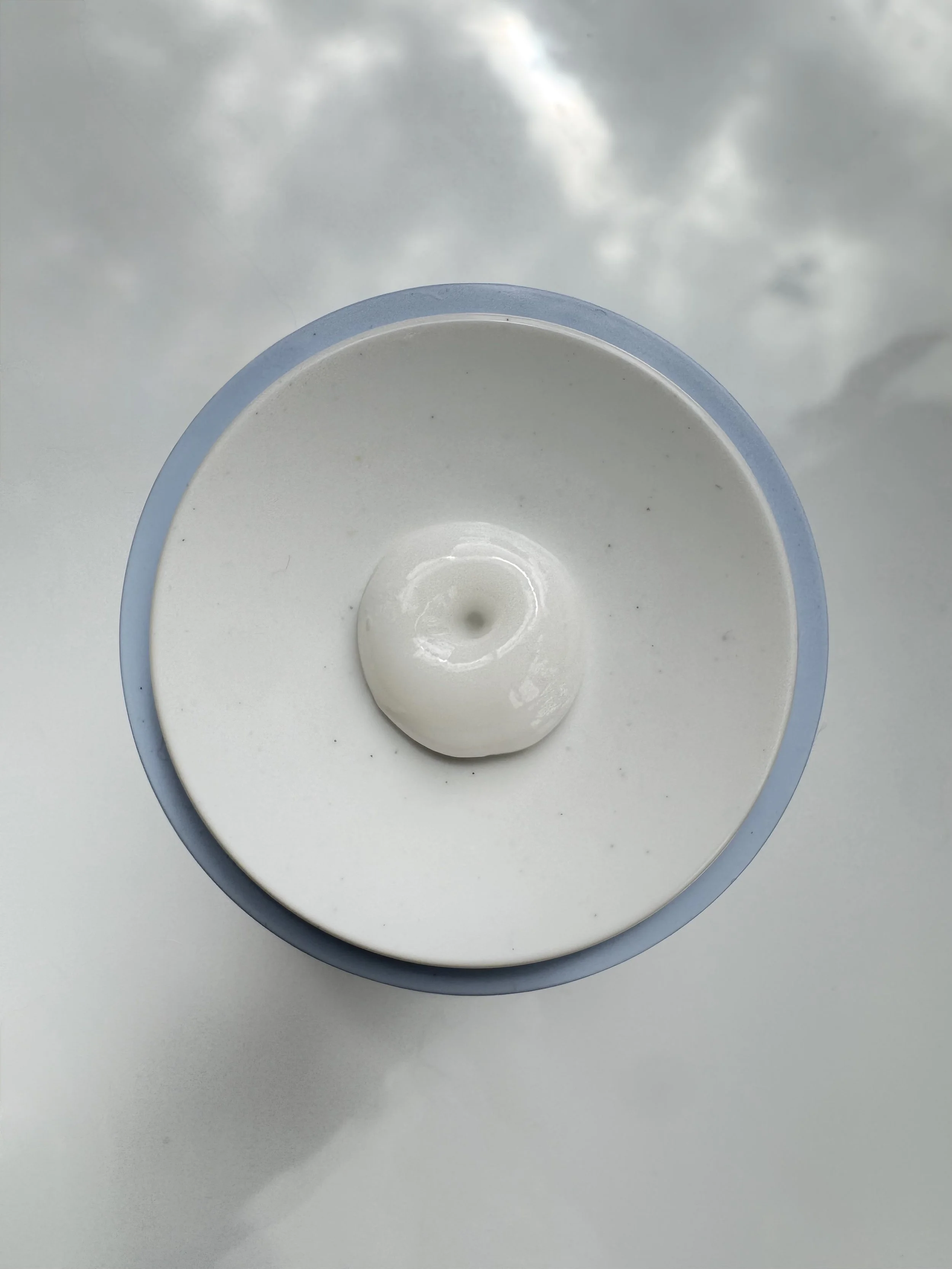
In addition to its potent hydrators, the new Skinfix Barrier Balancing Water Cream contains what the brand characterizes as a 2.35% Balancing Complex of Zinc PCA, Niacinamide, and Green Tea Extract to help absorb oil and reduce visible redness. It’s what oily skin needs most – and what I’m looking for in a moisturizer on a hot day.
As always, as important as what’s in a skincare product is what isn’t. Barrier Balancing Water Cream is fragrance-free, alcohol-free and free of harsh actives, making it ideal for sensitive skins as well as oily and acne-prone skins.
But it’s the texture for me! It’s super easy to spread and absorbs immediately – great for an AM routine layered over a light Vitamin C serum and before a sunscreen.
I find it strikes the perfect balance over Drunk Elephant’s C-Luma Hydrabright Vitamin C Serum and the Paula’s Choice 10% Niacinamide Booster. Top it off with a light sunscreen milk like the Paula’s Choice Youth-Extending Daily Hydrating Fluid SPF 50 Sunscreen or the new Elemis Pro-Collagen Skin Protection Fluid SPF 50 and you’re good to go.
6. Pros & Cons
What I like about it: The Skinfix Barrier Balancing Water Cream is the perfect summer moisturizer – super lightweight, quickly absorbed, and easily layered into your routine. With a single emollient plant oil and multiple humectants, it strikes the ideal balance between hydration and moisture that oily skin needs most.
What I don’t like about it: I like everything about the Barrier Balancing Water Cream. But I am confused about why the brand needed a new lightweight gel moisturizer to begin with considering the Skinfix Skin Barrier Restoring Gel Cream serves the same purpose. They’re both formulated for oily skin. If you have acne-prone skin, I would opt for the original Skin Barrier Restoring Gel Cream instead; it’s optimized for acne and free of known acne triggers.
Who it’s for: All skin types, especially oily skin.
SHOP THE BLOG: Want to try it for yourself? Purchase the Skinfix Barrier Balancing Water Cream for $54 here.
FIND OUT WHICH SERUM PERFORMED BETTER – AND BY HOW MUCH!
The Ingredient List of the Skinfix Barrier Balancing Water Cream:
 sii|emo 0 1, Propanediol solv|h, Niacinamide
  cci|sb|aacne|h, Triheptanoin emo, Saccharide Isomerate h, Ammonium Acryloyldimethyltaurate/VP Copolymer vc, Zinc Pca aacne|h, Hydrolyzed Hyaluronic Acid h, Allantoin so 0 0, Camellia Sinensis Seed Extract h|perf, Acetyl Heptapeptide-4 h, Glucose h, Citric Acid buff, Sodium Citrate chel|buff, Caprylyl Glycol h|emo, Trisodium Ethylenediamine Disuccinate chel, C12-20 Alkyl Glucoside emu|surf, C14-22 Alcohols, Ethylhexylglycerin pres, Potassium Sorbate pres, Phenoxyethanol pres
IS IT REALLY A SCAM?
Find out on my TikTok channel.
WATCH MY VIDEO REVIEW
THE BEST NIACINAMIDE SERUMS FOR CLOGGED PORES AND A BRIGHTER COMPLEXION
ON MY YOUTUBE CHANNEL HERE
WATCH MY VIDEO REVIEW OF
SKINCARE HACKS: GLYCOLIC ACID IS THE NATURAL DEODORANT THAT WORKS!
ON MY YOUTUBE CHANNEL HERE
WATCH MY VIDEO REVIEW OF
MY FAVORITE HUMECTANT SERUMS FROM PAULA'S CHOICE, THE INKEY LIST, GHOST DEMOCRACY AND MORE
ON MY YOUTUBE CHANNEL HERE
WATCH MY VIDEO REVIEW
COOL CLEAN FACIAL SUNSCREENS TO KEEP US SAFE AND SMILING IN THE SUN!
ON MY YOUTUBE CHANNEL HERE
WATCH MY VIDEO REVIEW
THE OPULUS BEAUTY LABS RETINOL SYSTEM – THE COOLEST RETINOL INNOVATION I’VE EVER SEEN
ON MY YOUTUBE CHANNEL HERE
WATCH MY VIDEO REVIEW OF
MY WINTER SKIN SAVIOR: SKINFIX BARRIER+ LIPID REPLENISHING SKINCARE
ON MY YOUTUBE CHANNEL HERE
WATCH MY VIDEO REVIEW
A COMPLETE K-BEAUTY ROUTINE WITH THE BEST FACIAL SKINCARE FROM PURITO, COSRX, MISSHA & MORE!
ON MY YOUTUBE CHANNEL HERE
WATCH MY VIDEO REVIEW
THE YEAR’S BEST VITAMIN C SERUMS WITH PAULA'S CHOICE, SUNDAY RILEY, THE INKEY LIST AND MORE!
ON MY YOUTUBE CHANNEL HERE
WATCH MY VIDEO REVIEW OF
A SELFCARE SUNDAY NOT FOR THE FAINT OF HEART – WITH THE PAULA’S CHOICE 25% AHA PEEL!
ON MY YOUTUBE CHANNEL HERE