
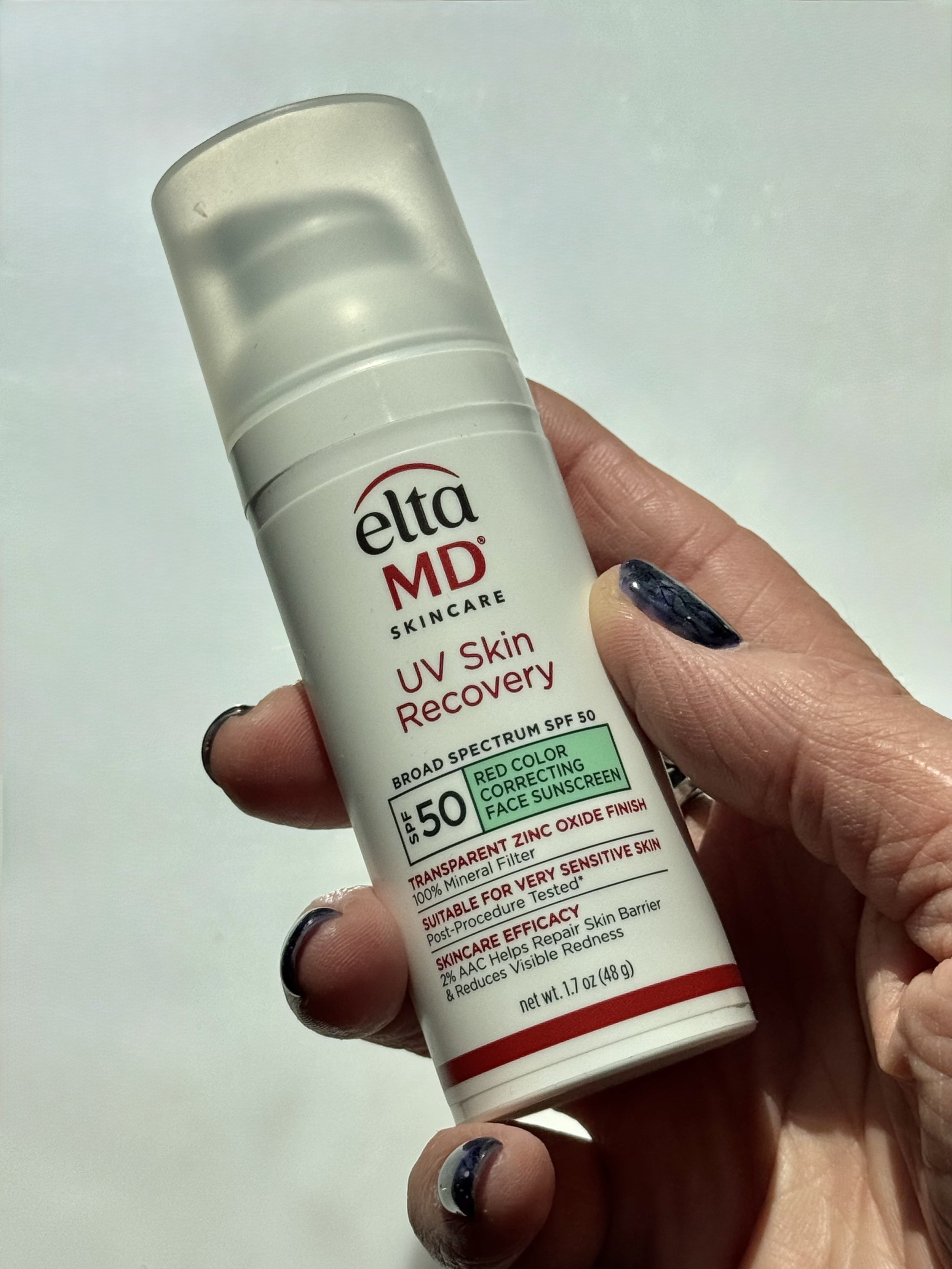
ELTAMD UV SKIN RECOVERY RED COLOR CORRECTING SUNSCREEN SPF 50 PRODUCT REVIEW - What causes skin redness on the face? How do I fix red skin on my face?
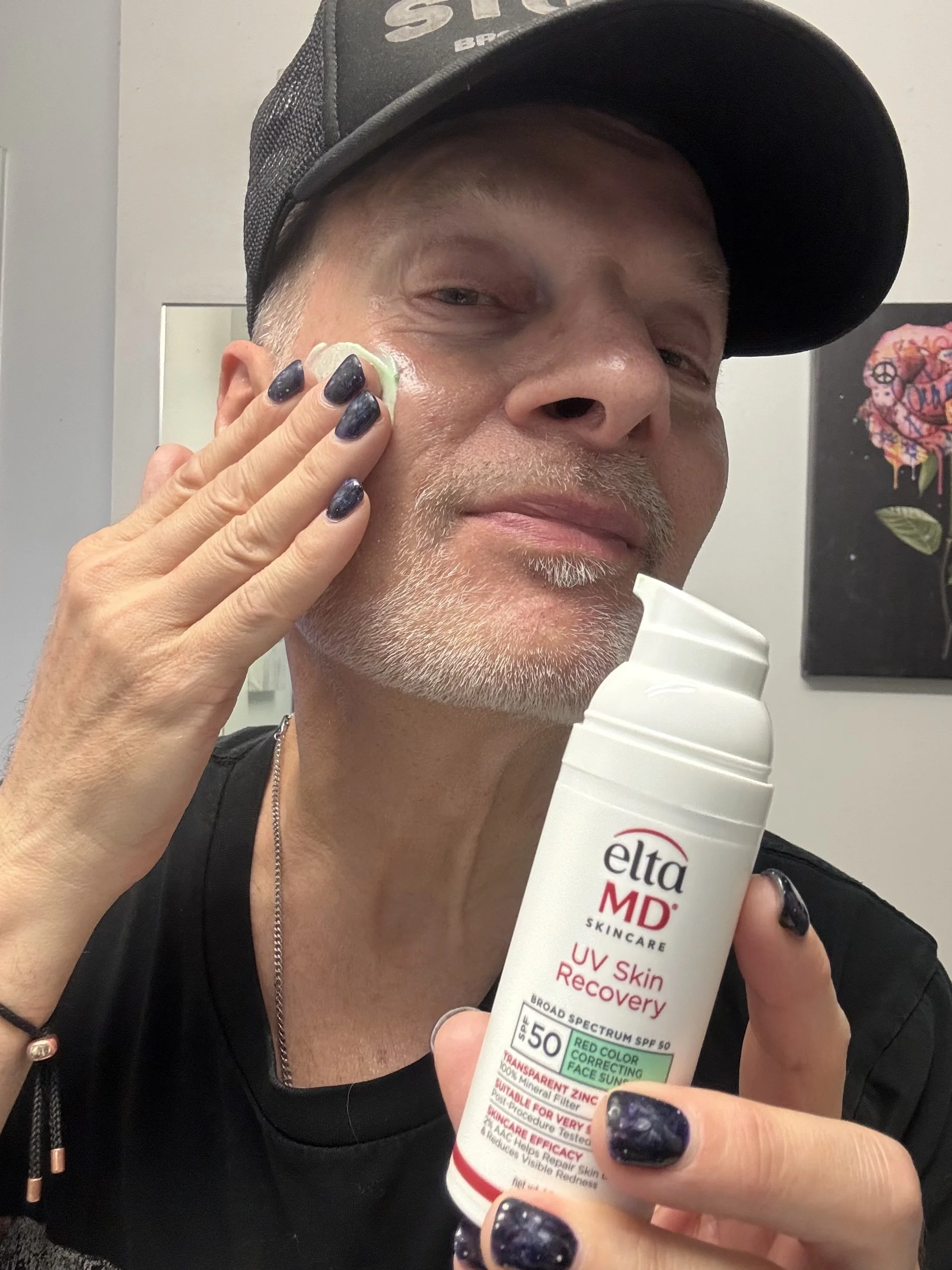
I am soooo not a fan of the marketing strategy to launch new sunscreens in the late spring. While I get why brands do it, I think it plays into the consumer’s mis-perception that sunscreen is only essential in the summer.
Sadly, summer is when consumers take it seriously and sunscreen sales ramp up.
I’ve said it a million times before, but sunscreen is truly the most important anti-aging product in your entire routine.
Aside from a cleanser, it’s often the least expensive, too. There’s no profit in that. Brands don’t want you and me thinking that a $40 facial sunscreen is the anti-aging essential. They want us to spend $100, $200 – or more! – on nonsensical “anti-aging” creams powered by marketing spin – much more spin than substance.
Admittedly, I get excited to try new sunscreens every day of the year! This year was my third as a product innovation judge in the Beauty Matter awards – and the category I was most excited to evaluate was sun care.
A dozen or so brands submitted new facial sunscreens for evaluation. Several stood out to me as exceptionally innovative. One of these was the new EltaMD UV Skin Recovery Red Color Correcting Sunscreen SPF 50. Of course, EltaMD is a leader in suncare innovation. I would expect nothing less than perfection.
I was certainly impressed – but not for the reasons I was expecting. With its unique positioning as a color-correcting sunscreen for skin redness and rosacea prone skin, EltaMD’s Color Correcting Sunscreen is one of the most uniquely positioned and pleasurable sunscreens for face that I’ve come across this year. But I’m not convinced it’s as wildly innovative as my first impressions led me to believe.
The green-tinted formula combines multiple technologies to instantly neutralize redness, calm irritation and address multiple skin concerns. Notably, it’s clinically proven to reduce redness by 14% in just 15 minutes – and it even helps calm damaged, post-treatment skin. If you’ve ever tried to apply sunscreen on sensitized skin, you know it’s not very fun. That one claim alone stands out to me.
My detailed review of it is just below…
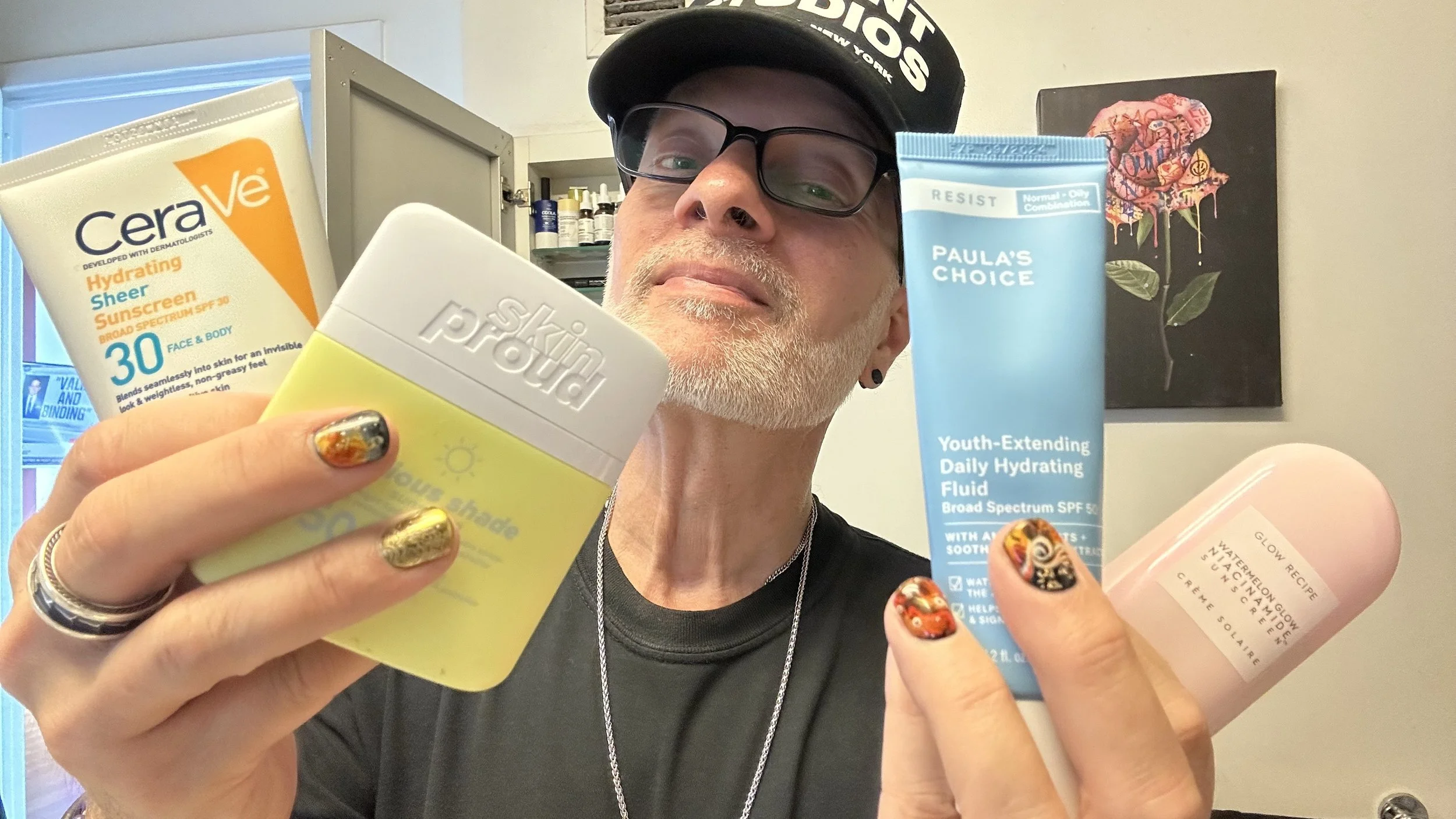
THE BEST SUNSCREENS FOR FACE
Before I get to my detailed EltaMD UV Skin Recovery Red Color Correcting Sunscreen SPF 50 product review, I wanted to explore some of the most pressing concerns of sensitive skin and particularly, skin redness – the focus of EltaMD’s latest sunscreen.
1. What causes skin redness on the face?
While not among the most common skin concern, facial redness is among the most serious – and challenging to treat. Often the potential causes are acute – as when you’ve overdone it with a Glycolic Acid toner or neglected to apply enough sunscreen on a hot summer day. Redness can often be the result of a chronic condition like rosacea or dermatitis.
Among the most common causes of skin redness are:
Rosacea – A chronic skin condition that often leads to persistent redness, flushing, visible blood vessels, and sometimes visible skin bumps on the cheeks, nose, forehead and chin.
Seborrheic Dermatitis – A common inflammatory skin disorder that creates red, scaly, even oily patches, especially around the nose, eyebrows, and hairline.
Allergic reactions or skin irritations – Forms of contact dermatitis that occur when the skin reacts to allergens or irritants such as cosmetics, skincare products, or environmental factors.
Sunburn – This overexposure to UV rays damages the skin, causing redness, tenderness, and sometimes blistering and peeling. Explore my picks of the best sunscreens for face on the blog here.
Acne – Inflammatory acne lesions such as pimples and cysts can cause localized redness; after they heal, they may leave behind red marks known as post-inflammatory erythema.
Eczema (Atopic Dermatitis) and Psoriasis – Chronic inflammatory skin conditions that can cause red, itchy, and scaly patches on the face.
Sources: AAD - 10 Reasons Your Face Is Red; Healthline - What to Know About Skin Redness
2. How do I fix red skin on my face?
Facial redness doesn’t have to be a constant in your life. Like many skin conditions, redness can be managed and even reduced through a combination of lifestyle changes, topical treatments, and medical procedures. The right solution for you depends on the underlying cause of the redness – such as rosacea, seborrheic dermatitis, irritation, or other skin condition (see #1 above).
A few proven ways to get your redness under control:
Identify and avoid triggers – Common triggers include spicy foods, alcohol, hot beverages, sun exposure, stress, and harsh skincare products.
Reassess your skincare routine – Incorporate a gentle, non-soap cleanser into your daily routine. Swap out your current sunscreen for a 100% mineral sunscreen with Zinc Oxide. Avoid skincare products with known irritants like fragrance and denatured alcohol. Look for products with soothing ingredients such as allantoin, aloe, centella asiatica or licorice extract. Explore my picks of the best sunscreens for face on the blog here.
See a dermatologist – For conditions like rosacea or seborrheic dermatitis, a dermatologist may prescribe topical medications such as: Azelaic Acid, Metronidazole, Ivermectin, a Brimonidine gel (for temporary reduction of redness) or Oxymetazoline cream.
Cool down your skin – Apply a cold compress to reduce immediate redness and soothe irritation. A hydrating sheet mask made with gentle, soothing actives can be very effective at calming redness. Keep a few sheet masks in the refrigerator for use on a hot humid day!
Sources: Cleveland Clinic - Rosacea: Symptoms, Causes, Triggers & Treatment - Cleveland Clinic; AAD - 10 Reasons Your Face Is Red; Winston Salem Dermatology - The Best Skin Treatments for Redness and Rosacea
3. Does sunscreen reduce facial redness?
Yes, a sunscreen can help reduce facial redness, especially if your redness is caused or made worse by sun exposure – or by conditions like rosacea and general skin sensitivity. The best sunscreen for sensitive skin is an all-mineral sunscreen with Zinc Oxide. Sunscreen is not a solution for instantly reducing facial redness – but it can help get skin redness under control.
Here’s what you can do to reduce facial redness:
Prevention of redness and flare-Ups – Sun exposure is a major trigger for facial redness, particularly in people with rosacea and sensitive skin. Using a broad-spectrum mineral sunscreen with Zinc Oxide can help prevent UV-induced inflammation, which can cause redness and make an existing flare-up worse.
Protection from UV damage: Sunscreen is the best protection from damaging UVA and UVB rays. UV is well know to break down collagen, increase inflammation, and exacerbate visible blood vessels and redness over time.
Soothing and calming effect: Many modern sunscreens, especially mineral formulas with Zinc Oxide, are designed for sensitive or redness-prone skin. Mineral UV filters sit on top of the skin and reflect UV rays without causing irritation; chemical sunscreens are absorbed by the skin and can more easily lead to irritation. Many sunscreens also include calming actives like chamomile, aloe, centella asiatica – or even a green tint – to visually neutralize facial redness.
Reduction of visible redness: Tinted mineral sunscreens with iron oxides can immediately and more effectively reduce the appearance of redness by providing coverage while protecting the skin from UV exposure and blue light.
Explore my picks of the best sunscreens for face on the blog here.
Sources: Byrdie - The 11 Best Sunscreens for Rosacea, According to Skin Experts; Healthline - 11 Best Sunscreens for Rosacea
4. What not to use on rosacea skin?
If you manage chronic rosacea, there are some obvious things you can do to avoid flare-ups or prevent existing rosacea from getting worse. Most importantly, look closely at your product INCIs, or ingredient lists, to determine if there’s anything in the formula that can potentially irritate your skin. Lots of ingredients in skincare products are known irritants.
Here’s what not to use on rosacea-prone skin:
Alcohol and products containing denatured alcohol; fragrance and products containing fragrance; witch hazel (extracted with alcohol); essentials oils, particularly peppermint oil, eucalyptus oil, tea tree oil, menthol and camphor; Sodium Lauryl Sulfate (SLS), a harsh detergent found in products that can strip the skin and provoke flare-ups; physical scrubs and harsh exfoliants that can cause micro-tears in your skin barrier and irritate the skin; harsh actives like Glycolic Acid and Benzoyl Peroxide.
Sources: Byrdie - Dermatologists Say These Ingredients Will Make Your Rosacea Worse; Healthline - 5 FAQs About Caring for Rosacea-Prone Skin
5. Product Review
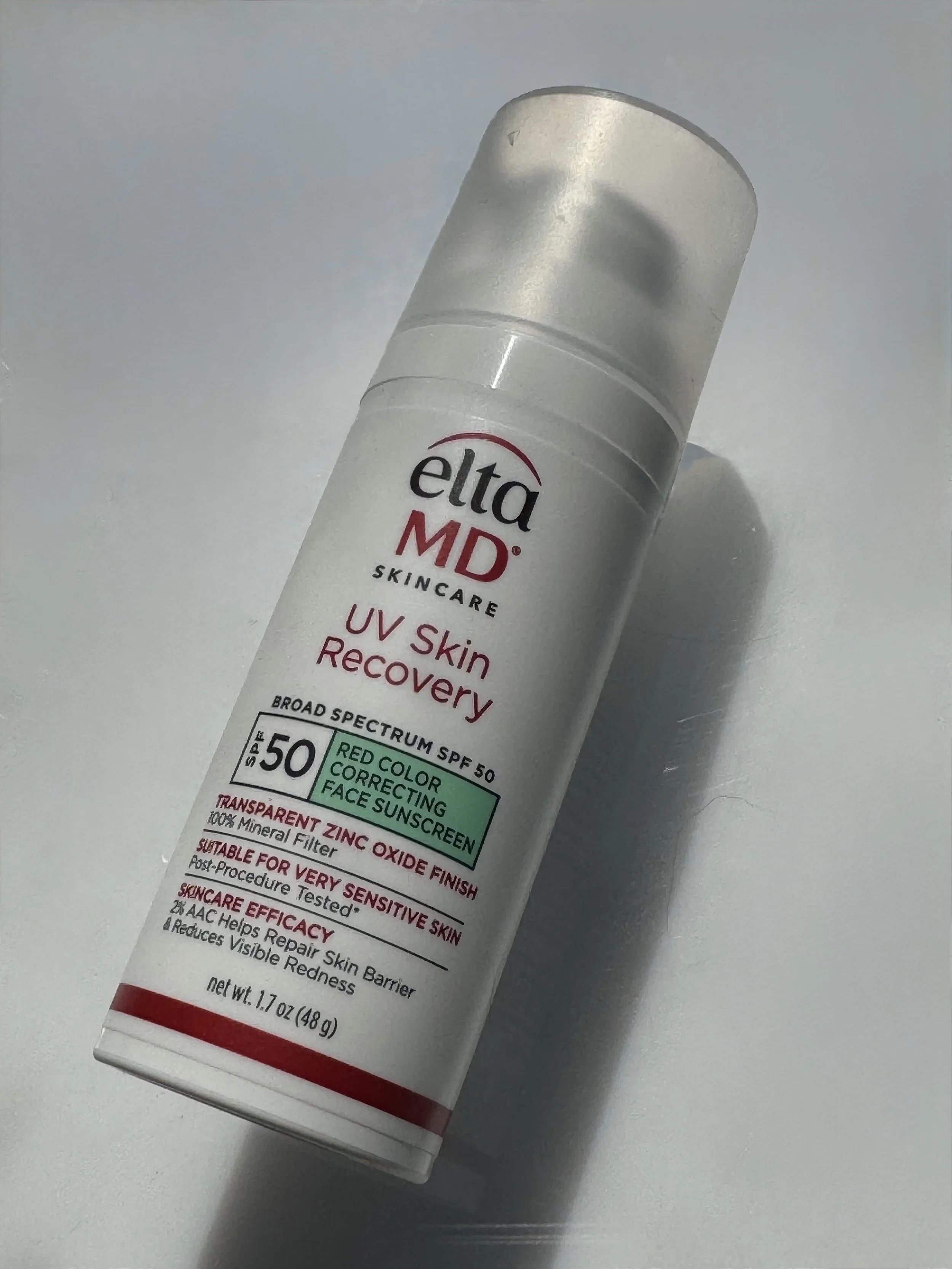
Due to long-standing government bureaucracy, sunscreen innovation is slow-going in the US. Approximately three dozen new UV filters have been approved in markets outside the country – including the EU, Asia and Australia – over the past three decades. The last time the FDA approved a new UV filter for facial sunscreens was in 1996.
This leaves skincare brands like EltaMD, Paula’s Choice and Supergoop with no choice but to innovate with textures and other skin health benefits that may be entirely unrelated to a sunscreen’s efficacy. And that’s the case with the new EltaMD UV Skin Recovery Red Color Correcting Sunscreen SPF 50. It’s relatively innovative, but not in the ways you would expect or want it to be.
The first thing to note is that this new SPF 50 facial sunscreen is a 100% mineral sunscreen with 12.9% Zinc Oxide. It’s one of the most pleasurable mineral sunscreen formulas on the market today.
Not a fan of how mineral sunscreens feel on the skin? EltaMD solved that.
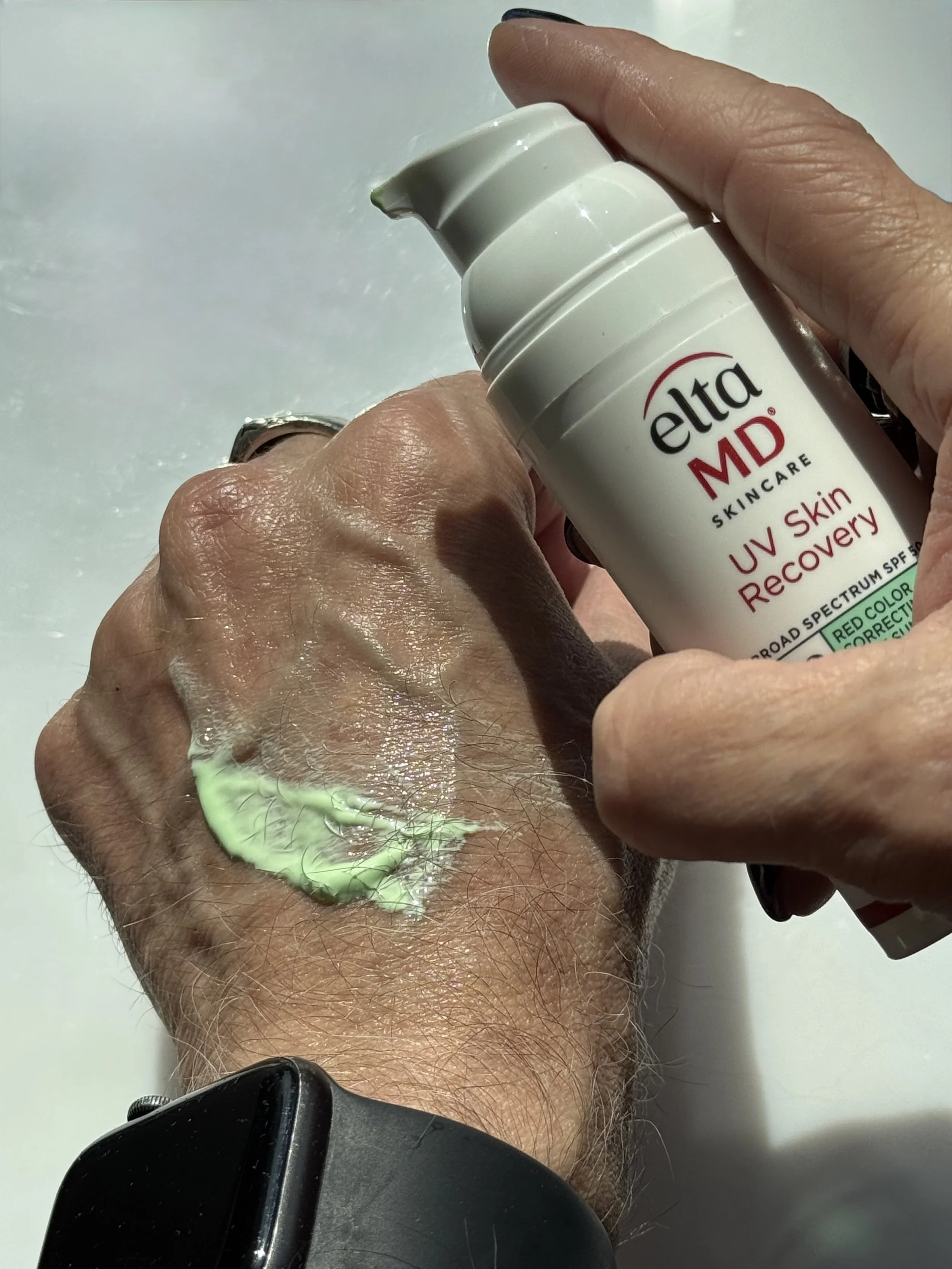
The second concern that the brand has overcome with their new UV Skin Recovery Red Color Correcting sunscreen formula is the white cast conundrum. Mineral sunscreens, while better for your skin overall and the best SPF for sensitive skin, tend to leave a white cast on the surface long after application. With its signature green tint, EltaMD checks that box too.
As with color-correcting makeup, that signature green tint is intended to correct skin redness – no matter its cause. However, it’s worth noting that the green tint isn’t derived from some miraculous calming complex or natural pigment; it’s derived from dyes added to the formula, notably Yellow 5 and Blue 1.
That’s not to say that the formula isn’t calming or that it relies solely on marketing spin. In fact, it’s clinically proven to calm skin and reduce redness – immediately and over time.
In a 12-week study on 45 subjects with “all skin complexions and sensitive skin,” the new EltaMD UV Skin Recovery Red Color Correcting Sunscreen was proven to:
Help calm damaged, post-treatment skin
Reduce redness by 14% in 15 minutes
Additionally, 86% of users showed an immediate reduction in visible redness within 15 minutes post-treatment.
The brand’s marketers claim the formula’s ability to address sensitivity is at least partly due to patented AAComplex technology – a “blend of 3 amino acids [taurine, arginine and glycine] that are proven to repair the skin barrier, visibly reduce redness, minimize the risk of irritation and help reduce sun damage.”
I’ve never heard of amino acids with that kind of incredible potency. Yet, a study published in the Journal of Cosmetic Dermatology concluded that, “The in vitro and in vivo clinical studies demonstrated that the AAComplex technology formulated in the commercially available Skin Recovery System effectively reduced skin irritation and redness as well as accelerating the skin repair process.”
So it seems legit to me. There’s also a hint of soothing Centella Asiatica far down the INCI. My guess is that what truly calms sensitivity – or prevents sensitivity in the first place – is the Zinc Oxide in the formula. And the green tint from those dyes helps to instantly correct redness.
In all, it’s not marketing spin-free but it’s also not nonsense. In fact, EltaMD’s UV Skin Recovery Red Color Correcting Sunscreen SPF 50 is a damn good sunscreen – and one of my favorites of the year.
If you're sensitive to chemical sunscreens and looking for a product that can color correct redness and calm irritation, this one is for you!

6. Pros & Cons
What I like about it: The EltaMD UV Skin Recovery Red Color Correcting Sunscreen SPF 50 is a solid facial sunscreen. I absolutely love the texture and feel on application. It remains comfortable on the skin throughout the day and does help to tone down some of my natural redness – though not as effectively as a tinted mineral sunscreen with iron oxides.
What I don’t like about it: I think some of the focus on redness and sensitivity is marketing spin – particularly surrounding the green tint.
Who it’s for: All skin types, especially sensitive skin.
SHOP THE BLOG: Want to try it for yourself? Purchase the EltaMD UV Skin Recovery Red Color Correcting Sunscreen SPF 50 for $52 here.
FIND OUT WHICH SERUM PERFORMED BETTER – AND BY HOW MUCH!
The Ingredient List of the EltaMD UV Skin Recovery Red Color Correcting Sunscreen SPF 50:
 sii, Triethoxycaprylylsilane, Oleth-20 surf 0 1, Oleth-3 Phosphate surf|emu 2 2, Coco-Glucoside surf, Polyisobutene vc, Citric Acid buff, Polyhydroxystearic Acid emu, PEG-7 Trimethylolpropane Coconut Ether emu|surf, Salicyloyl Phytosphingosine, Tocopheryl Acetate aox 0 0, Glycerin
  sii|h 0 0, Tocopherol aox 0-3 0-3, Ethylhexylglycerin pres, Sorbitan Isostearate emu 0 1-2, Pongamia Pinnata Seed Extract, Glycine sii, Yellow 5 col, Lactic Acid exf|h|buff, Polyglyceryl-10 Stearate emu, Centella Asiatica Leaf Extract so|aox|h, Blue 1 col, Glucose h, Triethyl Citrate perf, Polyglyceryl-6 Behenate, Behenic Acid surf|emu 0 0, Ceramide NP sii, Cholesterol sii|emo 0 0, Glyceryl Stearate emo|emu 0 1, Ceramide NS, Ceramide EOP sii, Ceramide AP sii
IS IT REALLY A SCAM?
Find out on my TikTok channel.
WATCH MY VIDEO REVIEW
THE BEST NIACINAMIDE SERUMS FOR CLOGGED PORES AND A BRIGHTER COMPLEXION
ON MY YOUTUBE CHANNEL HERE
WATCH MY VIDEO REVIEW OF
SKINCARE HACKS: GLYCOLIC ACID IS THE NATURAL DEODORANT THAT WORKS!
ON MY YOUTUBE CHANNEL HERE
WATCH MY VIDEO REVIEW OF
MY FAVORITE HUMECTANT SERUMS FROM PAULA'S CHOICE, THE INKEY LIST, GHOST DEMOCRACY AND MORE
ON MY YOUTUBE CHANNEL HERE
WATCH MY VIDEO REVIEW
COOL CLEAN FACIAL SUNSCREENS TO KEEP US SAFE AND SMILING IN THE SUN!
ON MY YOUTUBE CHANNEL HERE
WATCH MY VIDEO REVIEW
THE OPULUS BEAUTY LABS RETINOL SYSTEM – THE COOLEST RETINOL INNOVATION I’VE EVER SEEN
ON MY YOUTUBE CHANNEL HERE
WATCH MY VIDEO REVIEW OF
MY WINTER SKIN SAVIOR: SKINFIX BARRIER+ LIPID REPLENISHING SKINCARE
ON MY YOUTUBE CHANNEL HERE
WATCH MY VIDEO REVIEW
A COMPLETE K-BEAUTY ROUTINE WITH THE BEST FACIAL SKINCARE FROM PURITO, COSRX, MISSHA & MORE!
ON MY YOUTUBE CHANNEL HERE
WATCH MY VIDEO REVIEW
THE YEAR’S BEST VITAMIN C SERUMS WITH PAULA'S CHOICE, SUNDAY RILEY, THE INKEY LIST AND MORE!
ON MY YOUTUBE CHANNEL HERE
WATCH MY VIDEO REVIEW OF
A SELFCARE SUNDAY NOT FOR THE FAINT OF HEART – WITH THE PAULA’S CHOICE 25% AHA PEEL!
ON MY YOUTUBE CHANNEL HERE